The short answer
Published guidance suggests a minimum of around 60 years for clay tile, yet hand-made peg tiles on historic buildings have survived for centuries. The figure depends on tile quality, fixings, exposure and how well the roof has been maintained, so the condition of the tiles matters more than their age.
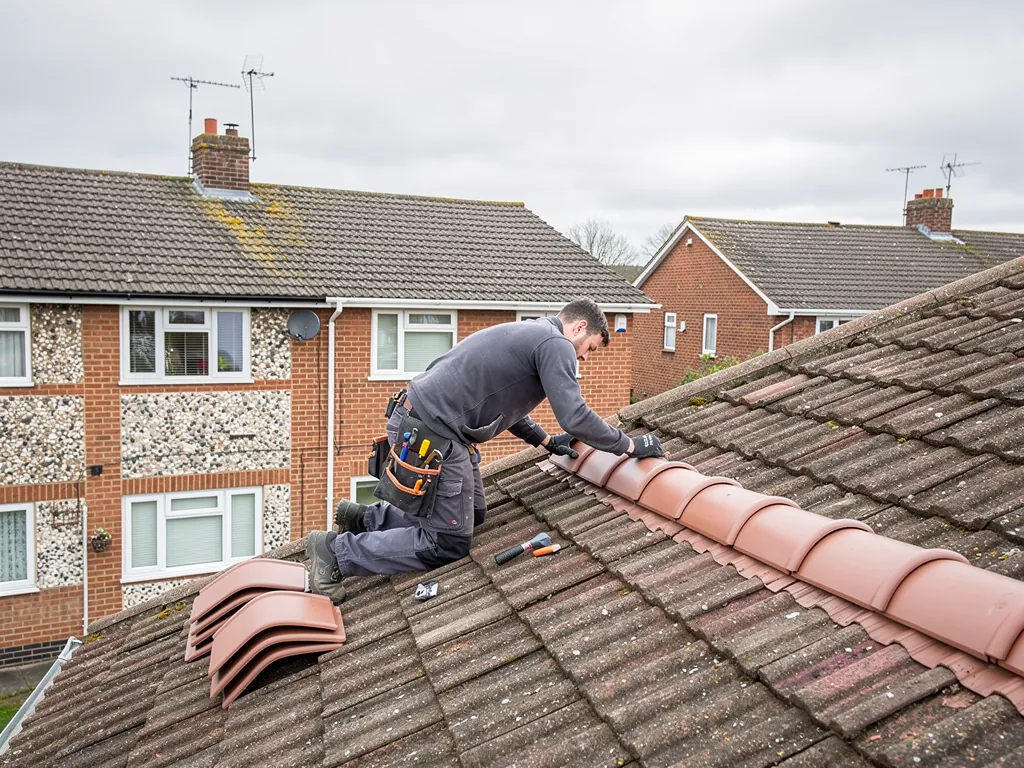
Red clay tile is one of the coverings the Victoria County History mentions for Kintbury, and it is the one we are asked about most often in the Kennet valley. Whether such a roof has years left depends on what is wrong with it, not on a number.
Q1.1What do the published figures say?
Marley, citing the BRE's Green Guide of 2008, gives a minimum life expectancy of 60 years for clay tiles. The Building Conservation Directory warns that this is not a reliable guide, because roofs of hand-made peg tiles centuries old are still keeping the weather out. We treat 60 years as a point to start asking questions, never as a deadline.
Q1.2What actually wears out first?
Tiles themselves rarely fail first. Nails corrode, battens rot, and the mortar under the ridge crumbles. Frost can then flake the face of a porous tile, and once its surface has gone, a tile soaks up water and splits in the next hard winter. Tapping along a slope or lifting a tile in a hidden corner tells us more than any age estimate. A tile that rings clearly is generally sound; a dull sound or a crumbling edge means it is on the way out.
Q1.3Should the slope be repaired or replaced?
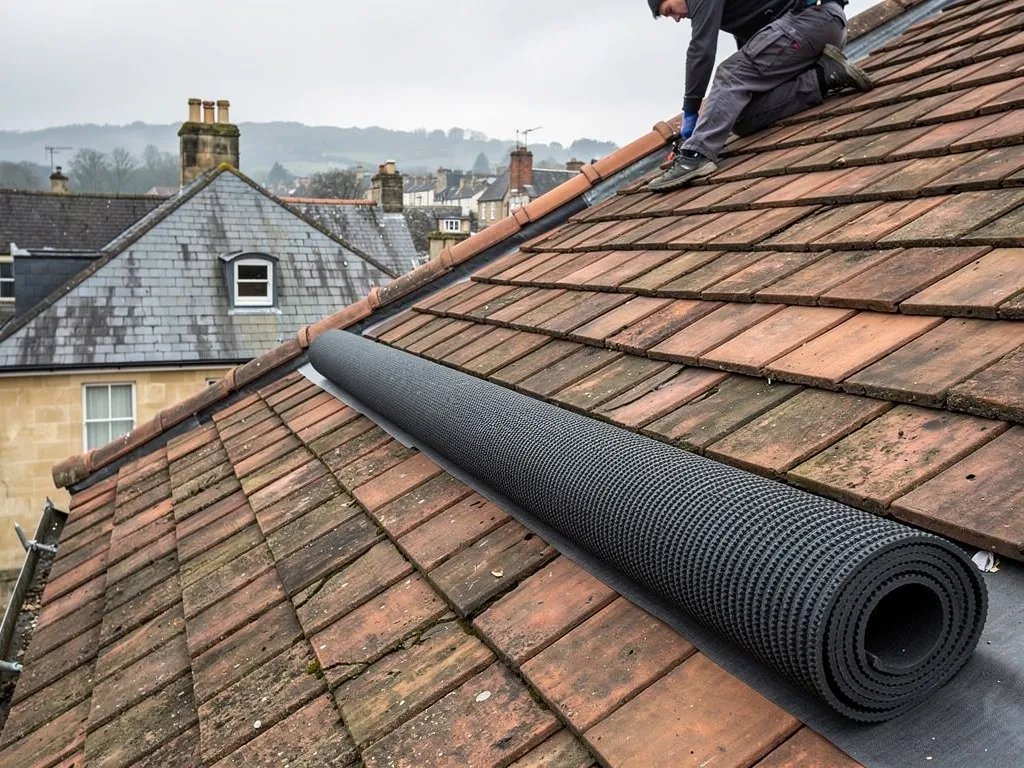
A slope with a few dozen cracked tiles and sound battens is a repair. A slope where tiles are flaking everywhere, or where the battens crumble when touched, is a re-roof. Our pitched roofing page walks through a full re-cover, and our roof repairs page explains when it is not needed. Where the tiles are good but the fixings are not, we strip the slope, fit new battens and underlay, then lay the sound tiles back with matching pieces for any that have broken.