The short answer
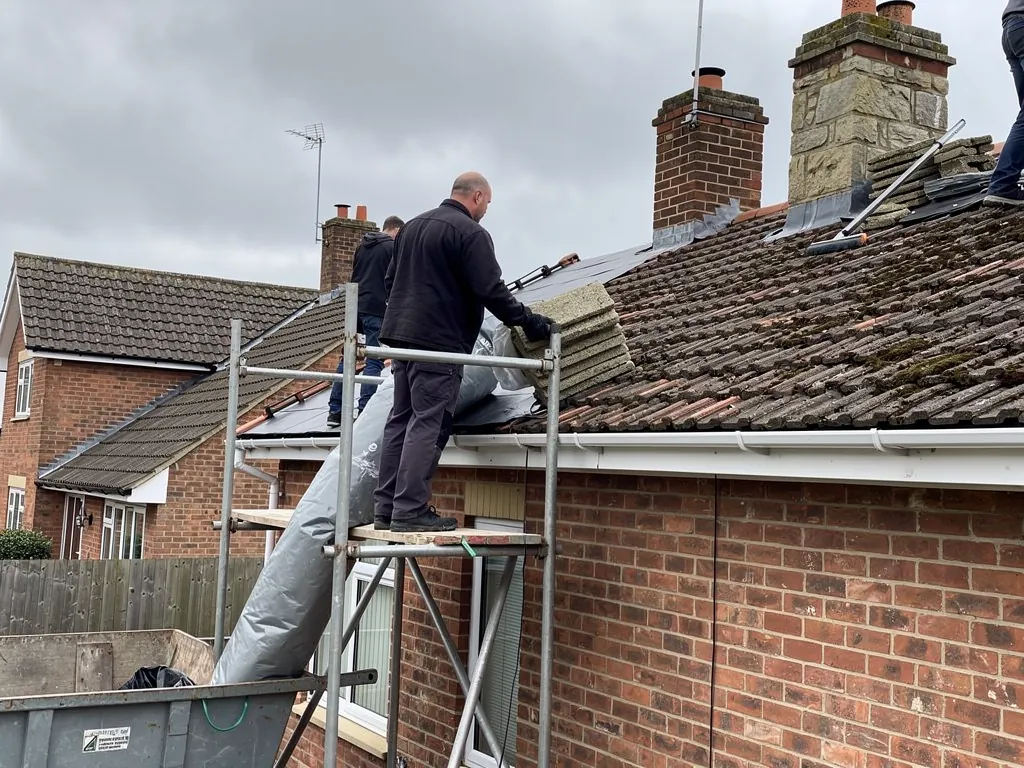
Patient, specific repairs. Roofs on the village's oldest houses have been mended again and again, so much of the work is reading earlier patches, undoing the harmful ones, and dealing with the stacks, valleys and junctions where water finds its way in.
Holt has a good spread of older buildings, from Holt Manor in the seventeenth century to The Courts in the early eighteenth, and a parish church, St Katharine's, rebuilt in 1891 with a medieval tower and porch kept. Roofs on houses of that age are rarely uniform. A rear slope may be a century newer than the front, and a stack may have been rebuilt twice, each time in different bricks and mortar.
Q1.1How do you tell old repairs from new faults?
By studying the roof from the loft and from a ladder. Old water marks on rafters show a leak has run for years, while pale new timber beside them shows where someone has already stepped in. Outside, hard cement fillets and mortar smeared across tiles usually mean an earlier patch is now causing damage, because hard cement traps water against softer material beneath and cracks as the roof moves, which is why we favour softer, more flexible mortars on older masonry.
Q1.2Why do tall old chimney stacks give so much trouble?
A tall stack stands in the weather on every face. The mortar goes first, then the flaunching, then the lead. A stack that has leaned a little over the centuries needs to be left leaning, within reason, and held with proper fixings, not rebuilt for the sake of looking tidy. Our chimney repairs page walks through each stage, from repointing to a rebuild.
When we have finished reading a roof, you receive the survey photographs and a written quote setting out our recommendation. If a smaller repair would do, that is the one we propose, and for a listed house we mark which stages need the council's agreement. A good survey of an old roof can take a while, and it is worth that time, because decisions made on the first visit decide how much of the original fabric survives the work.