Wet slate and clay tile rooftops with chimney stacks after rain

Roofers in East Garston

From riverside cottages reached by their own little bridges to the stable yards that serve the gallops above, we repair and replace roofs in East Garston and the Lambourn valley.

East Garston's roofs, from the Lambourn to the gallops

Cottages beside a shallow chalk stream
Cottages along the river

The River Lambourn runs through East Garston and divides many houses from the main road, so a footbridge often leads to the front door. That layout shapes roof work more than the roof does. A scaffold has to stand beside or over water at some properties, materials arrive by hand over the bridge, and the river itself, a winterbourne fed from underground chalk aquifers, rises and falls with the season. Damp lingers in valley bottoms, so moss, blocked gutters and weeping flashings are common on houses beside the stream, and a roof that never fully dries ages faster than one on an open ridge. We plan access at the survey, so the written quote reflects the real route, and we tell you at that visit if a particular bank or bridge changes how the work is set up.

Long stable range with a pitched roof
Stable yards and racing buildings

The parish council describes racing as the primary industry in the valley, with racehorse training stables in the parish and gallops on the surrounding chalk downs. Yards bring their own roofs: long ranges of stables, tack rooms, feed stores, barns and houses for staff. Many have profiled sheet or tiled roofs with generous overhangs, wide gutters and timber boarding, and the faults are practical ones: loose sheets, corroded fixings, rooflights that have gone brittle, and rainwater goods overloaded in heavy rain. Work on a working yard has to fit around the animals, so timing is agreed in advance, and a roof that is open overnight is covered securely against rain before we leave.

Flint-walled church with a tiled porch
The church and the older houses

All Saints, the village's flint church with twelfth-century origins, serves the Church of England and is listed at grade II*, and older houses nearby tend to share its habits: thick walls, deep eaves and roofs repaired many times. Slipped tiles, perished lead and tired ridge bedding are the usual complaints, and each is cheaper to fix early. Flint and lime-mortar walls are sensitive to water running down them, so a failed gutter or a split lead flashing does more damage than it would to a modern wall. A conservation area is recorded for the village on West Berkshire Council's data, so any change that would alter a building's appearance is worth putting to the council before a price is agreed.

From Swindon to the Lambourn valley

Map showing East Garston and central Swindon. 17 road miles east-south-east of central Swindon.

Distance
17 road miles east-south-east of central Swindon
Council
West Berkshire Council
Landscape
North Wessex Downs National Landscape
River
The Lambourn, a winterbourne that runs through the village
Council
West Berkshire Council

What East Garston owners ask before a roof job

How do you scaffold a house the River Lambourn runs past?

We look at the bank, the bridge and the ground at the survey, then plan the scaffold, deliveries and waste route around them, so the written quote covers the real access.

Can you repair a stable roof on a working training yard?

Yes. We agree working hours, gates and the places horses will not be led past, and we keep materials and tools away from them while the roof is open.

Does the North Wessex Downs setting restrict roof repairs here?

Not a repair or re-cover in the same material. It limits some larger additions, so ask West Berkshire Council before planning dormers.

Q1

What does living beside the Lambourn do to a roof?

Blocked gutter full of leaves overflowing down a brick wall
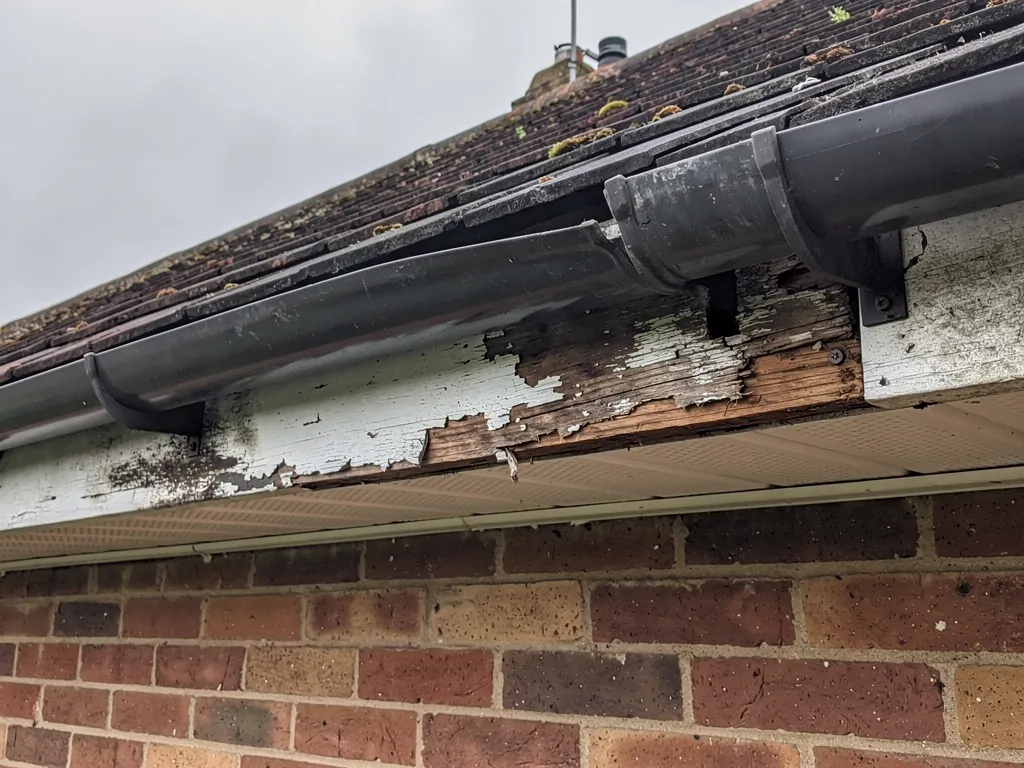
Rotten timber fascia and soffit with flaking paint

The short answer

It keeps the air damper around the house, which feeds moss on slopes, algae on north faces and slow rot in timber at the eaves. The river does not damage a sound roof, but it punishes blocked gutters and open joints, and it makes access for repairs harder than on a road-front house.

East Garston sits in a chalk valley, and the river that runs through it is part of village life. For anyone who owns a roof there, the practical effect is dampness that hangs about, particularly on the shady slope and wherever branches overhang the roof. Walls and timbers take the same moisture, so a roof problem there rarely stays a roof problem for long.

Why do moss, algae and gutters matter?

Moss soaks up water, presses it against the covering and creeps beneath tile edges, while leaf litter blocks gutters and sends overflow down the wall. Both are cheap to prevent and expensive to ignore. Clearing a gutter takes minutes. Replacing a rotten fascia board and the rafter ends behind it takes days, and the second job is often the result of skipping the first. Our gutters, soffits and fascias page explains how we check the roofline from end to end.

Is the timber at the eaves sound?

Where water has been spilling for years, the rafter feet and wall plate take it first. We probe the timber with a screwdriver, not just look at it, and tell you whether it is sound, suspect or past saving. A few damaged rafter ends can often be spliced and repaired without opening the whole roof.

How do we get materials to the job?

A house with its own bridge needs a different plan from one on a street. Tiles and sheets are carried over, bins are moved by hand, and scaffold legs may need boards beneath them on soft ground. None of that is a problem, provided it is planned in advance, which is why the access discussion comes at the survey and not on the first morning.

Q2

How are stable and barn roofs in the valley repaired?

The answer

By finding out why the roof is failing before choosing a fix. Sheeted barn and stable roofs usually leak at fixings, laps and rooflights, while tiled ranges fail at ridges and valleys. A patch is right if the sheets are sound. Replacement is better if the fixings and sheets are tired throughout.

The parish council describes racing as the primary industry in the valley, and yards of all sizes are the result. A range of boxes with a pitched roof is easy to see from the ground, but the faults that matter sit up at the ridge and along the gutters, where a ladder survey from the yard will not reach. Photographs taken on the roof show the real picture.

Where do sheets and fixings leak?

Profiled metal and fibre-cement sheets leak at their laps, around fixings and where an old rooflight has cracked. Dropped or missing sealing washers let water in along each fixing line. On older sheeting, particularly fibre-cement from before 2000, we assume asbestos until a test shows otherwise. Taking asbestos cement down carefully counts as non-licensed work, yet broken or badly damaged sheets are treated differently, and the waste needs a consignment note. Where the work needs a licence, an outside specialist takes it on, and we tell you what a test shows before anything is lifted. Our commercial roofing page covers the larger agricultural and yard roofs.

What about tiled stable ranges?

Where stables are tiled, we look at ridge bedding, valley linings and the lead at the junction with the main house. A leak into a loose box can be harmful to the horse that lives there, so repair priority matters, and we prioritise leaks over cosmetic work.

How do we work around the horses?

The yard manager decides when and where work happens. We keep working areas fenced, the noise and dust away from the horses as far as the job allows, and the gates closed. Small jobs are often done in a single visit, and larger ones are phased box by box so animals can stay in their stables while the roof is open.


Our view

Patch sound sheets, replace tired ones, and never guess what an old sheet is made of.

Q3

Can I alter a roof in East Garston without consent?

Long flat roof on a 1960s brick building being re-covered
Brick and limestone cottages around a small village green

The short answer

Repairs and renewals in the same material seldom need planning permission. West Berkshire Council decides planning questions, and a conservation area is recorded for the village, with the North Wessex Downs around it. Listed buildings, including the grade II* church, have their own consent rules.

The village is inside the North Wessex Downs National Landscape, and West Berkshire Council's records include an East Garston conservation area. Both mean the council takes more interest in changes to how a building looks. Neither stops you keeping a roof in good order, and a well-kept roof is the best argument for leaving a building as it is.

Do repairs and renewals need consent?

Refixing slipped tiles, re-bedding a ridge or laying matching material over a worn covering is upkeep, and rarely brings a planning application with it. If your house is listed, or an Article 4 direction removes that freedom, check with West Berkshire Council first. Its planning team can say which applies to your address.

Will re-covering an East Garston roof need a building control application?

Where under 25 per cent of the building envelope and under 50 per cent of the roof is touched, building control normally needs no application. Above those limits it does, and a covering 15 per cent heavier or more has to be approved as well. In West Berkshire, building control is served by Building Control Solutions. If a job is notifiable, we talk you through the steps and handle the notification ourselves, which spares you the paperwork.

What about listed and church buildings?

Changes that affect a listed house's character need listed building consent. A parish church in use for Church of England worship, which All Saints is, follows the church's faculty system instead of listed building consent. Other denominations covered by the ecclesiastical exemption work through their own routes, and a redundant church loses the exemption.

Who decides what in East Garston
QuestionWho to ask
Planning and conservation areaWest Berkshire Council
Building control on a larger re-roofBuilding Control Solutions, or a registered building control approver
Listed houseWest Berkshire Council, for listed building consent
Parish churchThe church's faculty process

Questions asked beside the Lambourn

Why does moss come back so quickly on roofs beside the Lambourn?

Damp air and shade give it everything it needs, and a rough tile surface gives it somewhere to hold. Removing it helps, but the lasting fix is better light and airflow, clean gutters and a covering in good condition. We will tell you at the survey if moss is a surface problem or a sign that the tiles are tired.

Can you repair a roof where the only access is over a footbridge?

Yes. We settle it at the survey, deciding where the scaffold stands, how tiles and sheets are carried, and where the waste is stacked. The written quote takes account of the route. If a particular bridge cannot take the weight, we plan another way in, using a different gate, a longer carry or a smaller delivery vehicle, and the quote reflects whichever route is chosen.

Do you reach the yards and farms around East Garston?

Yes. The village and the others strung along the valley lie within our 30 road miles, and that takes in Lambourn, Great Shefford and the farms and yards between. Tell us the lane or the yard name when you call and we will work out the route.

My flint wall is damp below a leaking gutter. Is that a roof job?

Partly. The gutter or flashing needs fixing first, otherwise the wall keeps getting wet. Once the water is directed properly, a flint and lime wall will dry slowly over a season or two. We repair the roofline and tell you if the wall itself needs a mason.

Ask us about your roof

Tell us what’s happening and we’ll call you back.

  • Photos of what we find
  • A written quote
  • 10-year workmanship guarantee

Or call 01793 626096

Call Get a quote