The short answer
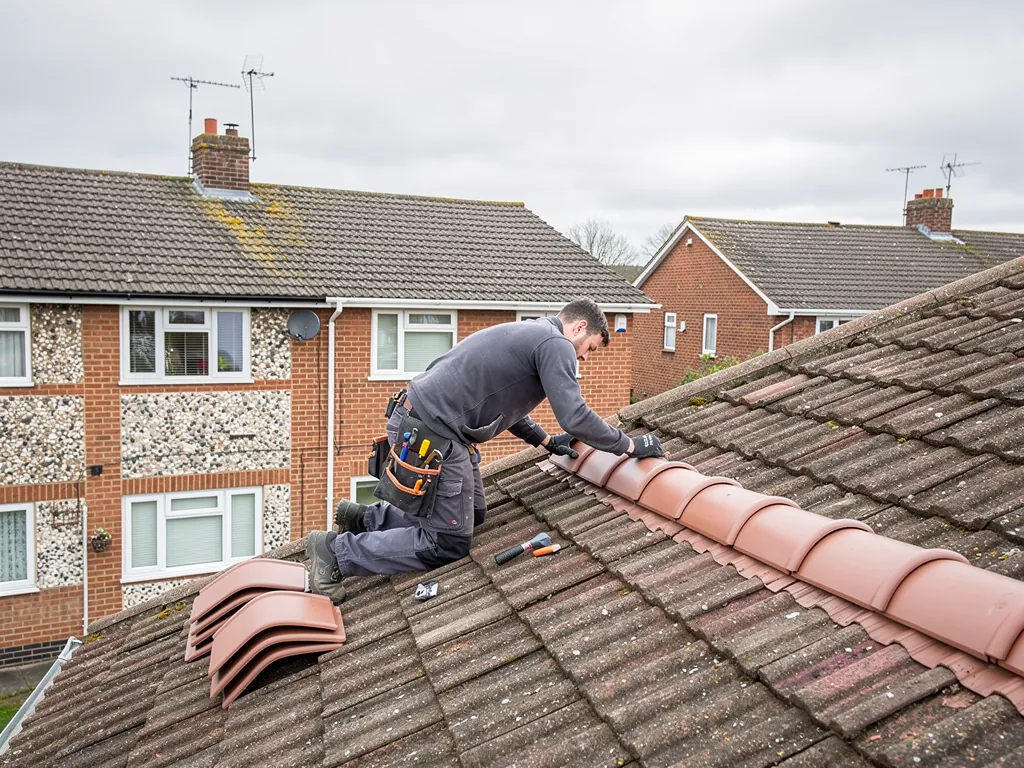
Usually, yes. On most stone slate roofs it is the pegs, battens and fixings that give up first, long before the stone. Repairing, or lifting and re-laying the same slates, normally suits the building and the budget better than a new covering of another material.
Only a few of Crudwell's stone buildings have stone slate roofs, according to Wiltshire Community History, which makes each one worth keeping. Once lost, a roof of this kind is hard to put back, because the right stone, in the right sizes, is not easy to source.
Q1.1What fails first on stone slate?
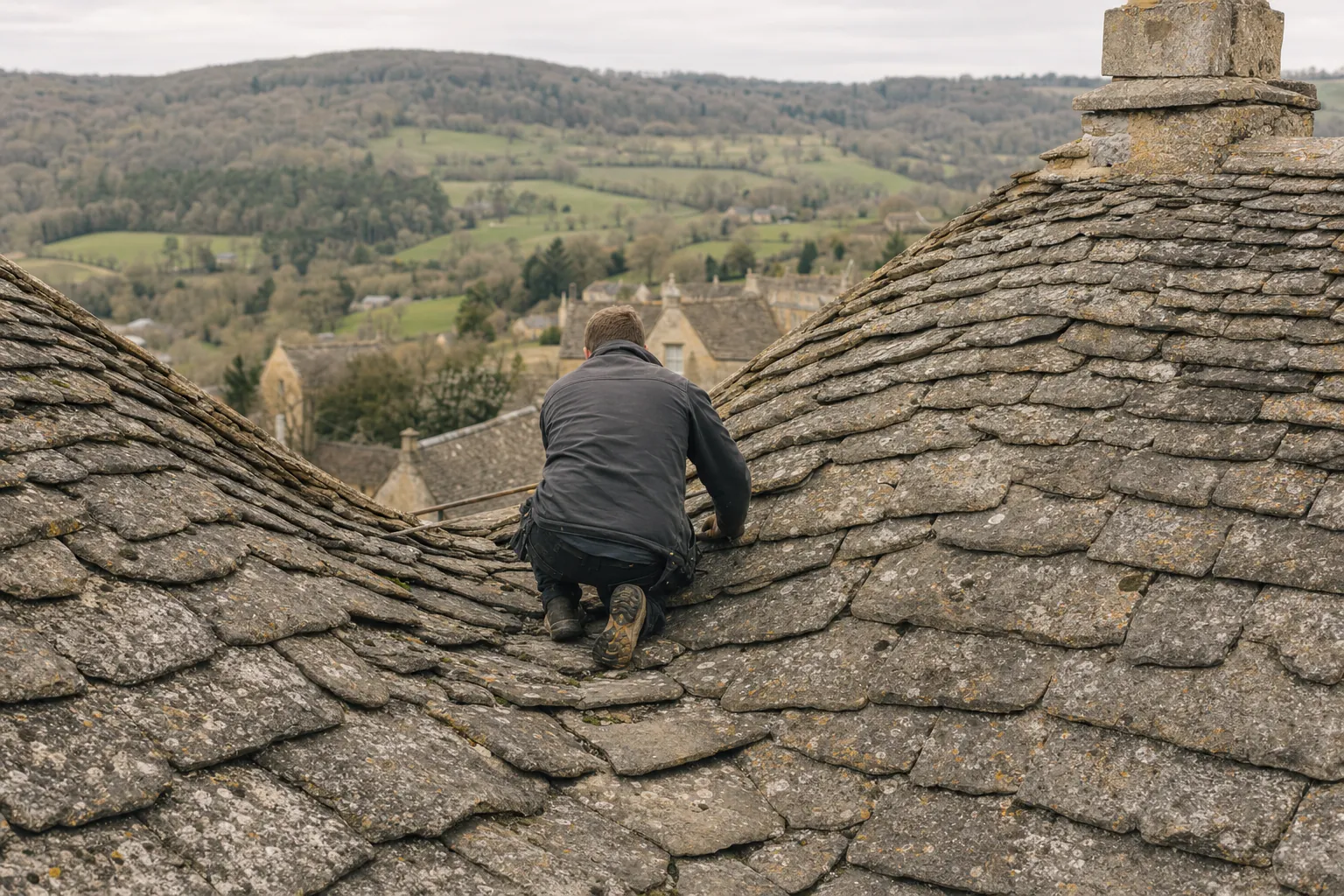
The slates themselves are rarely where trouble begins. Wooden pegs rot, battens soften and the bedding under the courses breaks down, so slates slip. Valleys, chimneys and the ridge are the usual leak points, which is why they are the first places we photograph, and why a repair there can save a slope that looks past saving from the ground. The same 2000 guide records that scraping a stone roof clean once a year could double its life, and that on stripping, about 50% of the slates have commonly perished. A survey tells us which case we have.
Q1.2What are diminishing courses?
Each course of a stone slate roof is a little smaller than the one below. The largest slates, about 600 mm long, go along the eaves, and they shrink steadily until the smallest, up by the ridge, are a fraction of that length. Replacement slates have to be sized to suit the course they fill, or the roof will not lie flat. Traditional pitches run steeply, at about 47 to 55 degrees.
Q1.3Must stone be replaced with stone?
Guidance the council reproduces says worn stone slates should be replaced with stone, not with concrete or artificial substitutes, and reclaimed slates belong back on the building that provided them. Our stone roofing page explains how we approach this kind of work. Where a stone roof has to come off, we photograph and number the slates in sections before anything is lifted, so they go back in the order they came down.