Row of stone cottages with steep stone slate roofs

Roofers in Charlton, Wiltshire

Roof repairs, chimney work and re-covering in Charlton, the small parish north-east of Malmesbury, from the cottages near St John the Baptist to Perry Green and the Charlton Park estate.

Charlton's roofs, from church tower to Perry Green

Cottages gathered beside an old parish church
Around St John the Baptist

St John the Baptist's church is Grade II* listed, with a late twelfth-century north arcade and a thirteenth-century west tower, and the oldest houses of the village cluster in its orbit. Buildings of that age usually have deep roof structures, thick walls and chimneys that have been repaired many times. On a house like that, water rarely comes in at the obvious point. It travels along a timber, drops behind a flashing and shows itself two rooms away. We trace the route properly before recommending anything, which can mean checking the loft in daylight, following a stain to its source and looking at the outside wall below it. We also look for old repairs that have been done in the wrong material, such as hard cement used to patch around a chimney.

Farm outbuildings and cottages in open countryside
Perry Green and the wider parish

Charlton is a parish, not a single street, and it includes the hamlet of Perry Green and the Charlton Park estate. A scattered parish like this means roofs of many ages: farmhouses with outbuildings, cottages that have been extended sideways and back, and barns converted to homes. Each needs a different answer, and a quote that treats them all alike is not much use to anyone. A converted barn has a large, simple roof where the main risk is the ridge and the verges. A cottage with a later rear extension has a join where two roofs meet, and that join is often the leak. Rural sites also give us plenty of tree cover, so valleys and gutters fill with leaves early in the autumn.

Single-storey flat-roofed rear addition
Extensions, porches and newer homes

Like any village a short drive from Malmesbury, Charlton has homes added or rebuilt in the twentieth century, along with the extensions every older house collects. Flat-roofed kitchens, lean-to utility rooms and single-storey rear additions are common jobs. Their roofs wear out on a different clock to the main roof, and a worn-out felt or membrane can be stripped and renewed while the main roof carries on untouched. That is often the most economical way to deal with a stain on a ceiling. On newer houses with concrete tiles, we look at ridge bedding, cracked tiles and the lead or flashing round the chimney. Small faults caught early are modest to put right, and they keep the loft dry. Where a flat roof has run its course, we set out whether it wants patching, a new layer or a full strip back to the deck, and what each would involve.

From Swindon to the Malmesbury side

Map showing Charlton and central Swindon. 17 road miles west-north-west of central Swindon.

Distance
17 road miles west-north-west of central Swindon
Council
Wiltshire Council
Council
Wiltshire Council
Conservation area
Charlton has a designated conservation area
Setting
A parish about two miles north-east of Malmesbury

Charlton roof questions

Can you tell what is wrong with a Charlton cottage roof from the ground?

Only part of it. We climb, photograph each slope and the chimney, and look inside the loft. Then we write down what we found and what we would do.

Does Charlton's conservation area stop me re-roofing?

No. Like-for-like work seldom needs an application. Changes to materials or the look of the roof are worth raising with Wiltshire Council first.

Do you work near Perry Green and Charlton Park?

Yes. The whole parish is inside our area, and an out-of-the-way site only changes how we plan access and where the skip sits.

Q1

How old is a typical Charlton cottage roof?

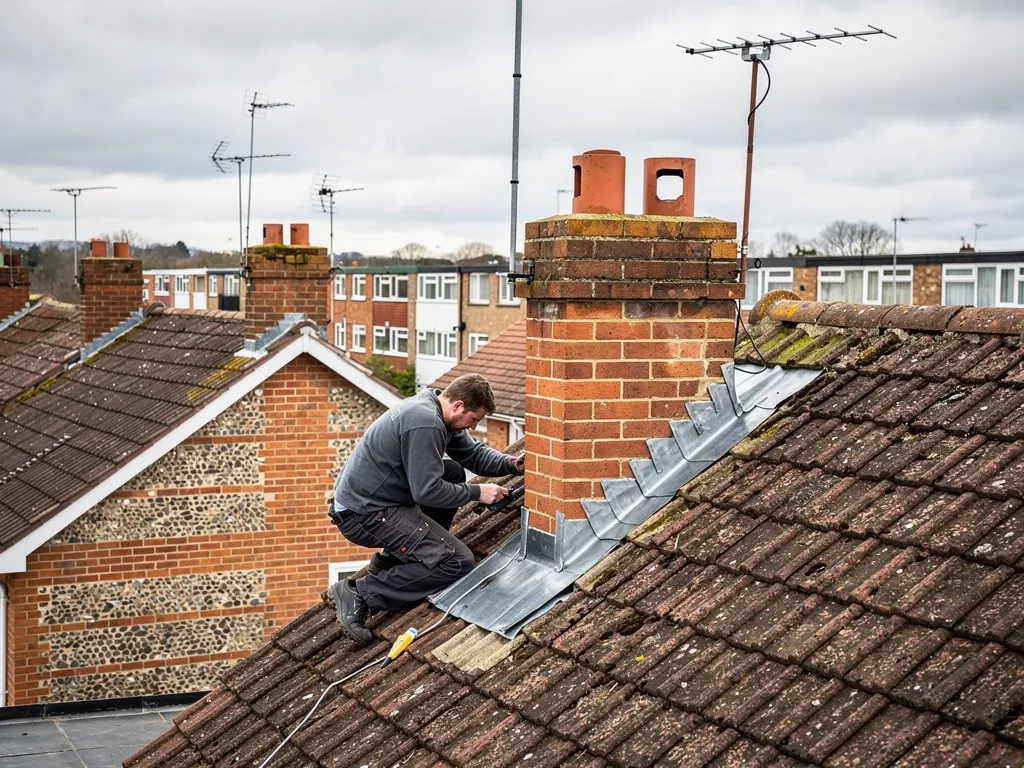
Roofer dressing stepped lead flashing around a brick chimney
Roofers on a slate roof along a limestone village street

The short answer

Often older than the covering on it. The oldest buildings near the church go back centuries, but their roofs have usually been recovered, patched and altered since. The covering you see may be a recent layer over a very old frame, so the timbers matter as much as the tiles.

Charlton's church has a late twelfth-century arcade and a thirteenth-century tower. The houses around it are younger, but a village with that kind of past tends to keep its buildings in use for a very long time, and the roofs show the layers of that use.

Are the frame and covering the same age?

The timbers of an old roof can outlast several coverings. What matters is whether they are still sound: dry, free of rot at the wall plate and straight enough to take the load. A roof that seems weary when viewed from the lane may only need its covering renewed, while a roof that looks tidy can hide soft timber under the gutter line. We check both from outside and inside before we advise.

What is wrong with old cement patches?

Old roofs collect repairs. A bag of cement round a chimney pot, a strip of mastic along a flashing or a sheet of felt under a few tiles will hold for a season and then fail. They also hide the real fault. We strip these back to find what is happening and replace them with lead and lime or a proper mortar where that is appropriate.

Why do survey photographs matter?

Most owners cannot see their own roof. A set of clear photographs, taken on the day, shows slipped tiles, open joints and failing flashings exactly as they are. They sit with the written quote, so the decision is yours and made from evidence.

For more on how that works, see roof repairs. Our advice is always the smallest piece of work that deals with the cause, and a quote that says what is not needed as well as what is.

Q2

Is it worth repairing a roof beside a listed church?

The answer

Usually yes, provided the repair is made in matching materials and fixed properly. St John the Baptist's is Grade II* listed, and the character of the village leans on its older buildings. Careful repair keeps that character, and a full re-cover is only worth it when the covering has truly reached the end.

A repair is worth doing when it stops the fault and leaves the roof sounder than before. Near a church of this age, it is also the approach that keeps the street looking right.

When is a repair enough?

Slipped tiles, a cracked ridge, a flashing that has lifted or a valley choked with debris are all repairable. Where the surrounding covering is still in good order, a repair can add many years. We replace what has failed with tiles or slates matched for size, colour and texture, and we refix those that have slipped.

When is a re-cover the honest answer?

If tiles are crumbling, laminating or cracking across the whole slope, repairs become a treadmill. Each winter another batch goes. At that point a new covering costs less than a run of call-outs. We strip the slope, inspect the battens and rafters, renew what is rotten, fit a modern underlay and relay on new battens.

What do underlay and ventilation add?

Old roofs were never lined, so the first thing an owner notices after a re-cover is how much less dust and draught comes through. A breathable underlay and the correct eaves ventilation keep the roof space dry in winter. BS 5250 covers how a cold roof is ventilated, and we follow the covering manufacturer's guidance for the product chosen.

Our roof replacement page sets out what moves the cost of a new covering, from access and scaffold to the tile you choose. In a quiet village the practical details count too: where the skip stands, how deliveries reach the house along a narrow lane, and how neighbours are kept informed. We plan those before the first tile comes off, then leave the lane and garden swept once the last load has gone.


Our view

Repair what is sound, replace what has failed, and never patch over a fault you have not found.

Q3

Which council deals with roof work in Charlton?

Roofer repointing a stone chimney stack above lead flashing
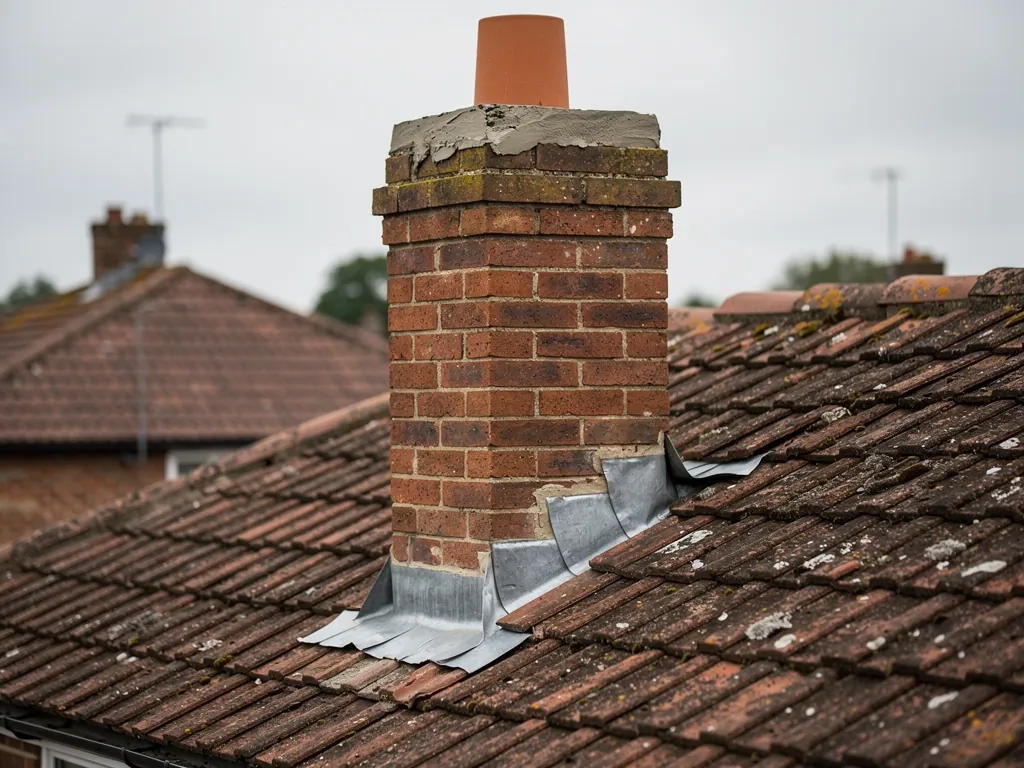
Brick chimney stack with new lead flashing on a clay tile roof

The short answer

Wiltshire Council covers planning and building control for Charlton. Most repairs need no application. Larger re-covers can bring in Building Regulations, and anything affecting a listed building or changing the look inside the conservation area is worth checking with the council before work begins.

Charlton sits in Wiltshire, so Wiltshire Council is the authority, even though Malmesbury is the nearest town. There is another Charlton in Wiltshire, near Pewsey, and the two are easily confused, so make sure any enquiry to the council or to us names the one near Malmesbury. A postcode settles it at once.

Does everyday roof work need permission?

Putting right cracked tiles, slipped tiles or a worn flashing with matching materials is upkeep, and no permission is needed. The same goes for most like-for-like re-roofing. Planning only becomes a question when the work changes how the building looks.

Does a Charlton re-cover need building control?

If a re-cover affects 25 per cent or more of the building envelope overall, or 50 per cent or more of the roof, Building Regulations apply, and insulation may have to be improved. A covering that weighs 15 per cent or more than the old one is a further trigger. The building control body can be Wiltshire Council's building control team or a registered building control approver. We lay out both choices and send in the notification whenever the work requires one.

What about the conservation area and listed buildings?

Charlton has a designated conservation area. The church is Grade II* listed, and any listed house nearby needs listed building consent for any work that alters its special character, and swapping the roofing material can do that. A Church of England church that is in use follows the faculty route instead. Unsure what applies at your address? Wiltshire Council's planning team can confirm it, and we will help you word the question before any price is fixed.

Our chimney repairs page covers stacks and flashings, which are often the part of an old roof that draws most attention.

MythA listed church next door means every house nearby needs consent for roof work.

FactOnly a listed building itself, or a change that alters appearance in the conservation area, brings the council in.

Questions from the Malmesbury side of Wiltshire

Why do cottage chimneys near St John the Baptist leak so often?

Stacks on old houses have been repointed, capped and patched many times. The mortar around the base wears away, flashings lift, and rain finds the gap. Chimneys also lose heat to the weather on all four sides, so any small crack travels. We look at the pots, the flaunching, the flashings and the brickwork before deciding between repointing, new lead and a rebuild.

Is a converted barn roof in Charlton a different job?

Yes. A barn conversion usually has a large, simple roof where the main exposure is at the ridge and the verges. The verge is where a roof finishes at the side of a gable. Those edges need firm mechanical fixings, and a long ridge wants even workmanship end to end.

Do you take on a small repair on a Charlton outbuilding?

Yes. A shed, garage or cart-shed roof gets the same survey photographs and written quote as a house. If the covering is felt, we say what a repair or new felt would involve. If it is a profiled sheet, we check for asbestos cement before anyone disturbs it.

Are old hand-bedded ridge tiles in Charlton a problem?

Often they are sound until the bedding starts to break up. Since BS 5534:2014, mortar alone has not been relied on to hold a ridge tile, so a re-bedded ridge also gets a mechanical fixing, or a tested BS 8612 dry-fix system takes its place. Either one keeps the ridge in position when the mortar eventually cracks, which on an exposed rural roof is a real advantage.

Ask us about your roof

Tell us what’s happening and we’ll call you back.

  • Photos of what we find
  • A written quote
  • 10-year workmanship guarantee

Or call 01793 626096

Call Get a quote