
Solar panels are usually fitted to a roof that was already middle-aged, so the day comes when the covering underneath wears out while the array above it is still earning. Nobody wants to strip a working roof early, and nobody wants to leave a failing one under a set of panels either. The two can be separated cleanly, though: the array is lifted off, the roof is renewed, and the panels are refitted on new fixings.
The detail that decides the cost and the programme is the type of system you have. Panels that sit on brackets above the tiles are a different job from panels built into the roof in place of the tiles. This guide explains both, then walks through the order of work, the electrics, the scaffold and the questions to put to your panel installer before the roofer arrives. If you are still weighing up the wider job, our guide to repairing or replacing a roof covers that decision, and the roof replacement page shows the full service.
Why the roof usually has to be renewed around the panels
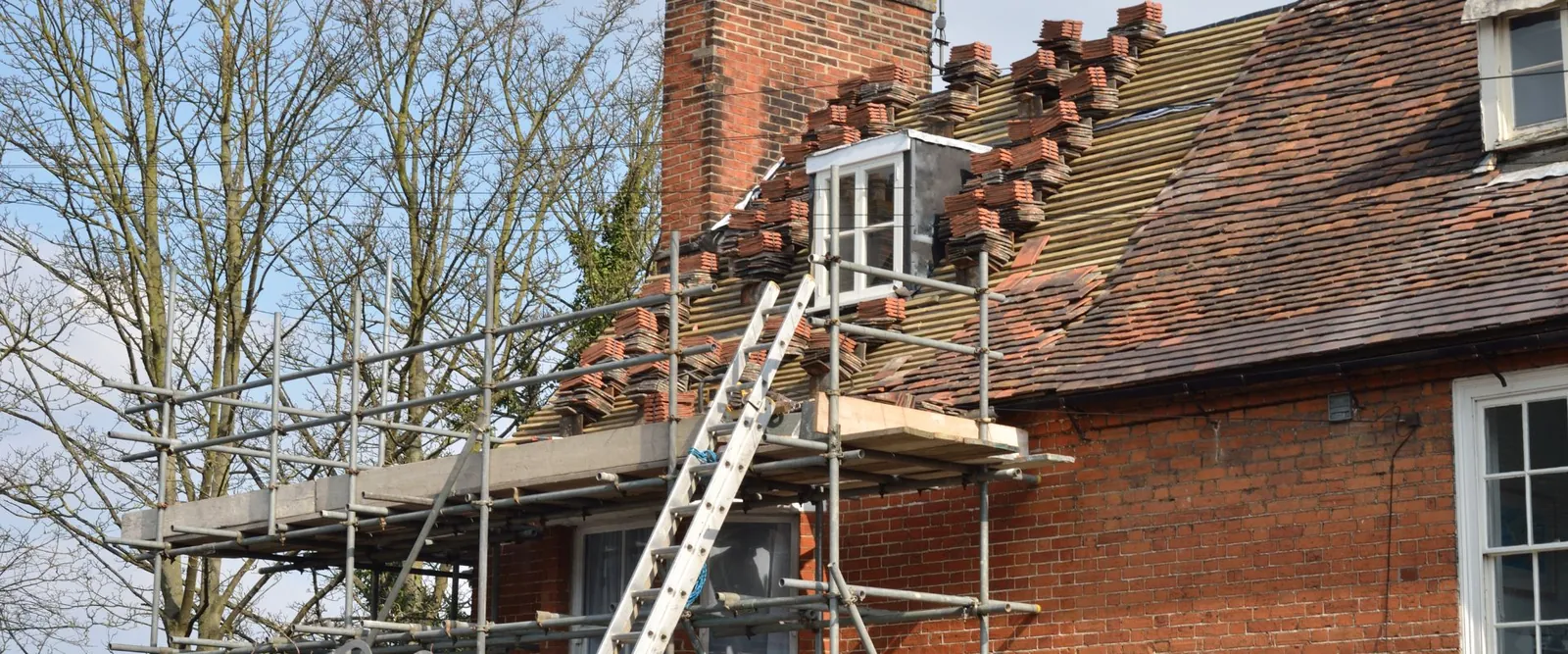
Panels cannot be left in place while a roof is stripped. The covering, the underlay and the battens all sit beneath the brackets or the frame, and the only way to renew them is to remove whatever is on top. There is no sensible way to re-slate or re-tile around an array that stays bolted to the rafters.
So the real question is how the array comes off and goes back, and whether it is worth doing before the roof has finished its life. The problem usually surfaces when a survey finds a failing roof, and it is tempting to patch it so the panels stay untouched. Sometimes that is right. A few loose tiles away from the array can be refixed without disturbing it. But where the underlay has perished, the battens are soft or the nails holding slates are failing across the whole slope, a patch only buys a short delay, and the panels will have to come off later anyway.
There is also a reason to do it in one go. Taking an array off, storing it and refitting it is a job with a cost of its own, mostly in the electrician's or installer's time and the scaffold. Doing that once, with the roof properly renewed, is better than doing it twice.
If panels are already on a roof that is leaking, flag the panels when you arrange our visit. A leak beneath an array is harder to trace, and we may need to see the underside of the covering before we know whether a repair is possible.
In-roof and on-roof systems are different jobs
The commoner type is on-roof. Metal hooks or brackets are screwed through the tiles or slates into the rafters, rails are bolted to them, and the panels clip to the rails a few centimetres above the covering. The roof beneath is a normal roof with a series of fixings through it. Removing an on-roof array means disconnecting and lifting the panels, then taking off the rails and brackets. The covering underneath is then an ordinary tile or slate roof that can be renewed in the usual way.
In-roof systems work the other way round. The panels sit in a frame set into the roof, with flashing trays around the edges, and they take the place of the tiles or slates in that area. They are neat from the street, but the panels are part of the weatherproofing. Lift them out and you have an open hole, so the roof has to be covered in temporary sheeting, and the surrounding tiles or slates have to be cut back into the frame details when the work is put back together.
Which type do I have?
Look at the array from the garden or the road. If you can see the covering continuing underneath, with a visible gap and rails, it is on-roof. If the panel edges sit level with the tiles and there is a metal surround, it is in-roof. Your installation paperwork should name the system and the manufacturer, and that is the first thing we ask for.
Does in-roof cost more to deal with?
Usually the work takes longer, because the flashing trays and the cut-in edges have to be rebuilt and checked, and some manufacturers have their own fixing instructions for refitting. The price is set by the survey, not by a rule of thumb.
The order of work, from panel off to panel on
The sequence matters more than any single task. Done in the wrong order you pay for the scaffold twice or leave an array waiting on a bare roof for weeks.
- Survey and quote. We look at the roof, the array and the fixings, and take photographs. The written quote follows.
- Booking the panel installer or an electrician. Someone qualified has to isolate the system before anyone touches the panels. We need a firm date for this before we fix ours.
- Scaffold goes up, usually one scaffold serving both trades.
- The array is disconnected, lifted off and stored safely, either on the ground under cover or at the installer's yard.
- The roof is stripped, the timbers checked, new underlay and battens fixed, and the new covering laid. Flashings, ridges and verges are finished.
- New brackets or the in-roof frame are fixed to the rafters, with the covering cut or lead-dressed neatly around them.
- The panels go back and the system is reconnected, tested and switched on by the person who isolated it.
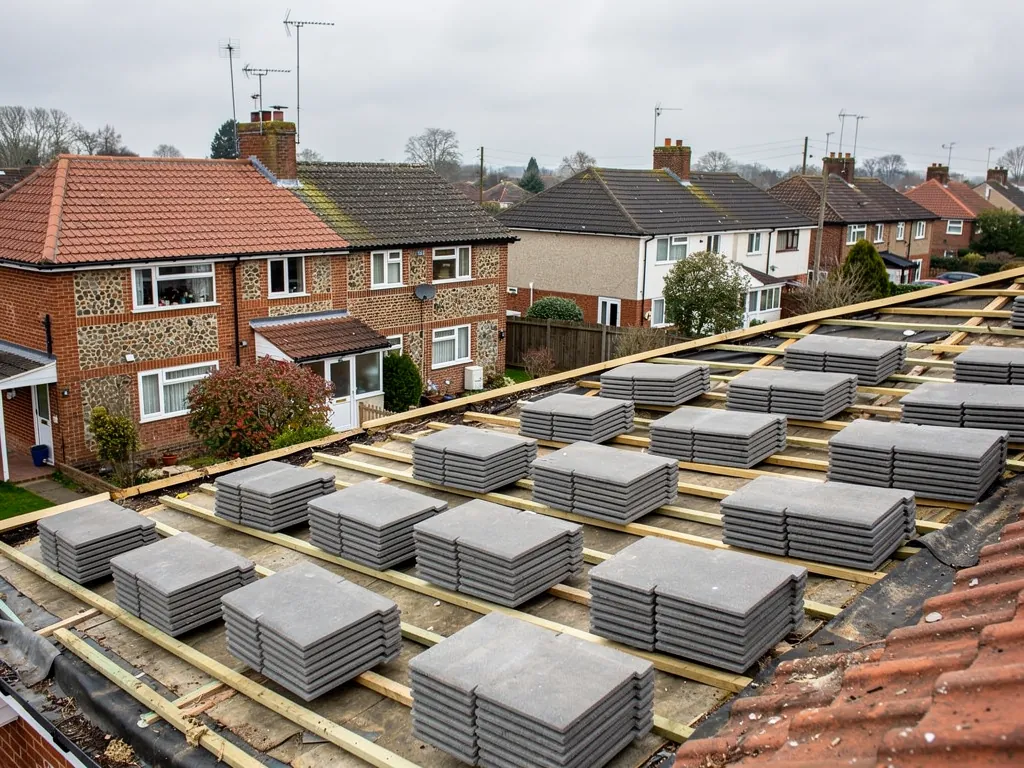
The covering can be finished while the array is stored, so the roof is weathertight before the panels return. That gap is usually the longest part of the programme, because it depends on the weather and on two trades being free.
Electrics, isolation and who does what
Panels generate electricity whenever there is daylight, and the cables from them run to an inverter and the consumer unit. A roofer does not disconnect that system and should not be asked to. The isolation, the removal and the reconnection belong to the original installer or another qualified electrician, and they should give you something in writing to confirm the system has been tested after refitting.
It helps to treat this as two separate jobs with one handover in the middle. We deal with the roof. Your installer or electrician deals with the array. We agree dates between us so the scaffold, the strip and the refit follow each other without gaps, but we do not take the electrical work onto our own guarantee. Our 10-year workmanship guarantee covers the roof we build, in writing, and your electrician's paperwork covers theirs.
Will refitting affect the panel warranty?
It can, and it is worth checking before you book. Some installers give a workmanship warranty that depends on the array being disturbed only by them, and manufacturers set their own conditions for handling and refitting. Ask your original installer what they require, and keep their answer with your other paperwork.
Do I lose generation while the work is done?
Yes, for as long as the array is off. That is a real cost of the job and a reason to keep the gap short. If you are on a time-limited arrangement with an energy supplier, ask them whether a pause affects it.
Scaffold, access and what drives the cost
Scaffolding is likely to be a large share of the job whatever the roof. MyBuilder's scaffolding guide (updated 21/08/2026) quotes roughly £850 to £1,200 for the usual arrangement round a two-storey house. A single scaffold shared between the roofer and the panel installer is cheaper than two separate visits, which is another reason to plan the trades together. If you want to see how the scaffold affects the rest of a re-roof, our guide to scaffolding for a re-roof goes into it.
Beyond the scaffold, these are the things that move the price of a re-roof with solar involved.
- The size of the array and how many fixings it has through the covering.
- Whether the system is in-roof or on-roof, and how the manufacturer says it should be refitted.
- The share of the roof renewed. Some people re-roof only the slope with the panels; others do the whole house while the scaffold is up.
- The condition of the timbers once the old covering is off. Rafters and battens that have been wet beneath a failing array may need replacing.
- Whether anything else is being done at the same time, such as fascias, gutters or the chimney.
After the survey you get a single written total for the roof. Whatever else you are offered, check whether scaffold and VAT sit inside each figure.
Weight, fixings and what the new roof must carry
Panels add weight and wind load to the roof, and the brackets concentrate that load on specific rafters. A new roof is the best moment to look at how those loads are carried. We check rafter sizes and condition once the covering is off, and we can fix additional noggins or sister boards where a rafter that takes the panel brackets is weak.
If you choose a heavier covering when you re-roof, for example moving from lightweight concrete tiles to natural slate or plain clay, the difference in weight has to be considered as well. Approved Document A treats a change of more than 15 per cent in roof loading as significant, and the Planning Portal says a covering that is 15 per cent or more heavier needs approval. Ask the building control team first. Our page on heavier roof coverings sets out the test.
Does a re-roof trigger Building Regulations?
Not always. The Planning Portal sets a two-part test: if work touches under 25 per cent of the total building envelope and under 50 per cent of the roof, a building control application is not normally required. Cross either limit and approval applies, with a possible thermal upgrade under Part L. The panels play no part in that test. Should your job be notifiable, the paperwork is ours to submit once the consent position has been explained.
Planning is separate again. Swapping one covering for the same kind seldom calls for permission, yet a listed building or an Article 4 area follows other rules, so raise it with the planning officers at Swindon Borough Council if yours is either.
What to ask before the work is booked
Trouble on solar re-roofs tends to come from gaps between two trades, not from the roofing itself. These questions close the gaps.
- Who is isolating and reconnecting the array, and on what date?
- Is the system in-roof or on-roof, and does the manufacturer have a refitting method?
- Where do the panels wait during the strip?
- Does the installer's warranty survive the panels being lifted by someone else?
- Is one scaffold being used for both trades, and for how long?
- If the strip shows rotten timbers, who agrees the extra work and how quickly?
Send us photographs of the array, the inverter label and any installation paperwork you have, and we can raise most of these before the survey. If a repair can properly cure the problem under the panels, you will hear that instead of a quote for a full strip. When the whole covering does have to go, we clear up and carry the rubbish off as the roof is finished.
If you would like the roof checked before you decide, our new roof cost guide sets out what shapes a price, and our guide to re-roofing a terraced house shows how shared walls and tight access can alter the plan. If you are changing the loft at the same time, see insulation when you re-roof.