
A new roof means working at height for days, and carrying slates, tiles and sheets up and down, so scaffolding is not optional on a house of any size. It protects the people on the roof, gives a safe edge to work from, and keeps the load off ladders. It also changes life at the property: the front garden fills with poles, the pavement may be partly closed, and the burglar alarm may need a word with the installer.
Costs vary with the shape of the house, how many sides need access, and how long the scaffold stays up. This guide uses published UK figures from named cost guides and explains the practical points. It belongs to our wider roof replacement service.
Why a roof job needs a full scaffold
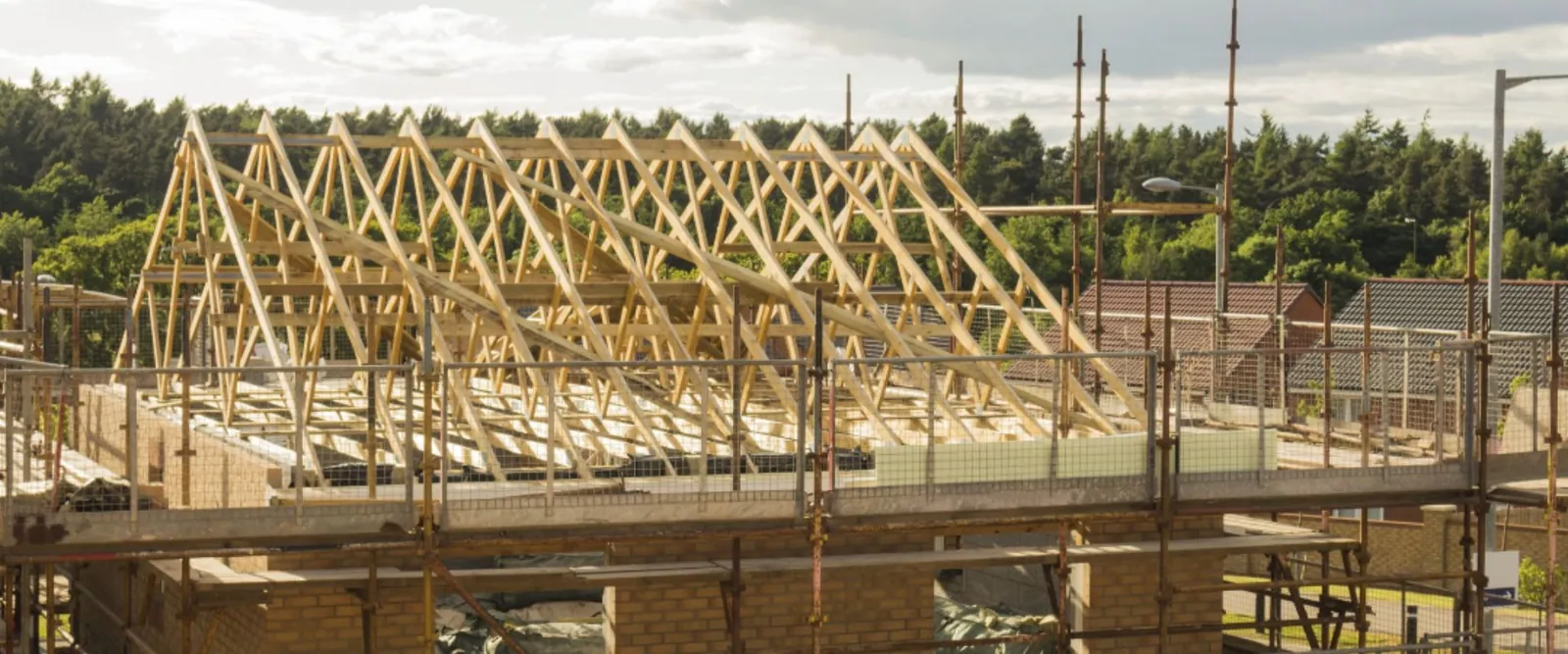
People sometimes ask whether a few ladders and roof ladders would do. For a small repair, often they will. For stripping and relaying a whole roof, they will not. A scaffold gives a working platform at eaves height, with guard rails, so tiles can be stacked within reach and a person who slips stops at the rail rather than at the ground.
The scaffold also does a second job: it carries the protection for the house itself. Debris netting or sheeting catches falling fragments of old mortar and slate, while a loading bay or hoist platform lifts new material up the elevation without anyone climbing with a bundle on their shoulder.
Does every side of the house need scaffolding?
Not always. A re-roof of a gable-ended house needs the long front and back elevations, plus a way round or across the gables where the verges are being renewed. A hipped roof usually needs all four sides. A terraced house may need only front and back, but access to the back is a separate matter, which our page on re-roofing a terraced house deals with.
What about a one-slope job?
If only one slope is being renewed, the scaffold can often be limited to that elevation, plus returns at each end. That lowers the hire cost, though you still pay to put it up and take it down.
Whenever you hold two roofing prices side by side, find out if each one covers scaffolding and VAT. Leave either out and the headline figure will not be the one on your final invoice.
Typical costs from published guides
Every job here is priced after a survey. Published national guides give a rough idea of the range, though they are not quotes, and the figures differ from one source to the next.
MyBuilder, in a guide updated in August 2026, puts an ordinary two-storey house at around £850 to £1,200. Its roof replacement guide gives approximately £1,125 for scaffolding. Checkatrade, in a roof replacement guide updated in October 2026, shows scaffolding at £700 to £1,300. A separate Checkatrade scaffolding guide from February 2026 puts hire of roughly £875 monthly for a semi.
| Item | Typical figure | Source |
|---|---|---|
| Standard two-storey set-up | £850 to £1,200 | MyBuilder, 2026 |
| Weekly domestic hire | £300 to £900 | MyBuilder, 2026 |
| Full wrap, two-storey semi or terrace | £1,500 to £2,600 | MyBuilder, 2026 |
| Chimney access, high level | £400 to £900 | MyBuilder, 2026 |
Why is the range so wide?
Height, plot shape and duration drive the figure. A tall Victorian terrace costs more than a bungalow. A house with a long single-storey extension needs extra lengths. A scaffold left up for three weeks costs more than one needed for one. Whether the house is wrapped in sheeting for weather protection also changes the figure.
Will the scaffold turn up as an extra bill from us?
No. You receive one written total after the survey, and we explain in plain words what has been allowed for. If another firm quotes, ask them whether scaffolding and VAT sit inside their figure.
Chimneys, towers and awkward access
A chimney stack on the ridge sometimes needs its own access, because the main scaffold stops at eaves level. MyBuilder gives £400 to £900 for high-level chimney scaffolding, and Checkatrade quotes £660 a week for chimney scaffolding on a hire basis. A roof-high tower may be cheaper than lifting the whole scaffold to ridge height, though it depends on the stack position.
If the stack is being rebuilt or only repointed, ask whether the work can be sequenced into the re-roof so one scaffold serves both. Our guide to re-roofing around a chimney covers what usually gets done together.
What about a conservatory or extension in the way?
Checkatrade lists conservatory bridging at £650 a week. A bridge spans a low structure so the scaffold does not have to stand on a glass or polycarbonate roof. Where the extension is solid and strong, the platform may be built over it. Either way, the survey notes the lengths we expect so the scaffolder can plan.
Can scaffolding go up where there is no side passage?
It can, but it needs thought. With a terrace and no rear access, equipment is sometimes passed through the house, or the back elevation is reached from a neighbour's garden by agreement. The scaffolder will suggest the route after a look at the site, and our terraced house page explains what to expect.
For a house with a long rear garden, a cluttered yard or a steep slope, tell us at survey. Poles, base plates and boards need firm ground, and a patio built over a soft fill may need sole boards under each leg to spread the load.
Scaffold licences and working next to the road
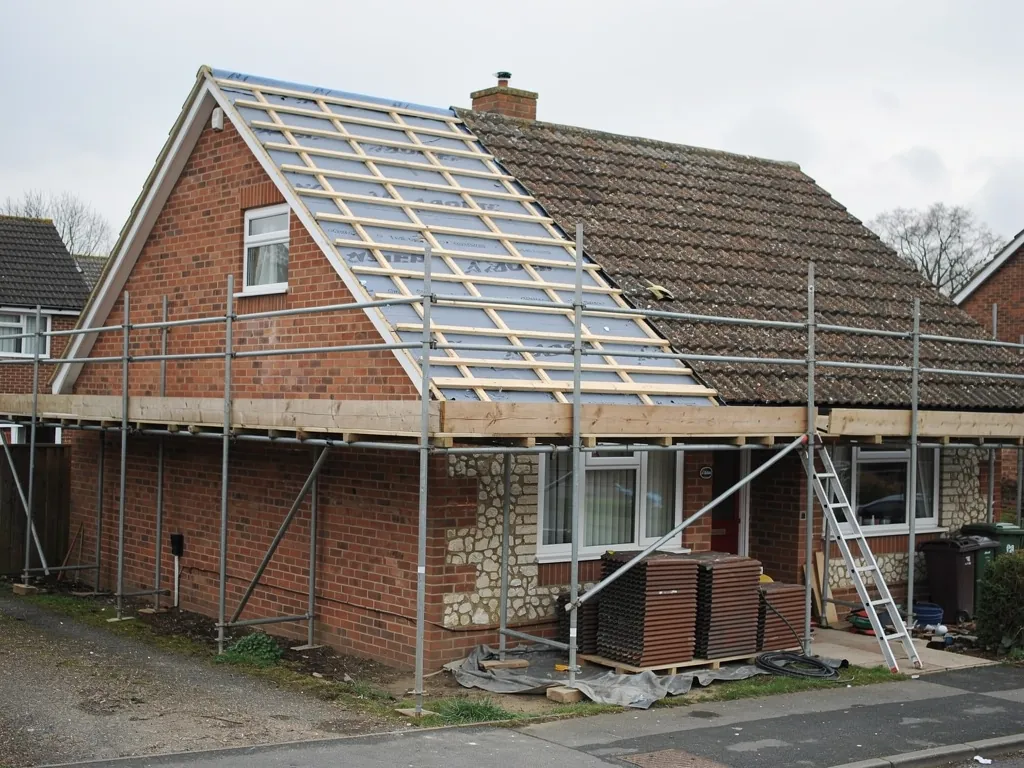
If any part of the scaffold, a skip or a materials lorry will stand on the pavement or the road, the council will usually want to know. A licence is normally needed for scaffolding on the public highway, and the pavement may need a protected walkway through it.
MyBuilder gives £50 to £200 as a typical scaffold licence cost, and Checkatrade says licences cost around £140 a month. Terms, fees and rules vary by council, so ask Swindon Borough Council, or the authority that covers your village, before a date is fixed. Swindon needs at least five working days to process one, so plan the start well ahead.
Who applies for the licence?
In Swindon the council takes the application from the scaffolding company itself, so check at the quote stage that it is booked. The scaffolding company must hold Chapter 8 signing, lighting and guarding qualifications and take account of safety beside the road and pavement.
What if I have a driveway instead?
Then the scaffold stands on your own land, no highway licence is needed for it, and the only question is whether cars and bins can still get past. A skip on the road does need its own permission, so ask us if one is planned. See our guide to waste when you re-roof for what usually leaves the site.
Alarms, windows and living with the poles
Scaffolding changes how a house is secured. Boards and tubes give anyone a way up to bedroom windows, so ground-floor ladders are normally taken down or fenced off when the crew finishes for the evening, and your own habits matter too. Keep upstairs windows shut and locked while the scaffold is up, even in warm weather.
Will the poles set off my alarm?
They can. Vibration sensors and motion detectors near a window may react to poles being struck, to workers passing the glass, or to nets flapping on a windy day. Tell your alarm company or your installer before the scaffold goes up, and say whether any detectors are on the eaves side. If your system is linked to a monitoring centre, agree a way to avoid false calls.
What about windows and doors?
Access to the front door, back door and garage must stay possible, usually through a gap between the standards or a ladder through a hatch. We agree this with the scaffolder before erection. Bear in mind you will lose some daylight where sheeting is hung, and windows behind it should stay shut.
Do I need to move things?
Yes, a little. Clear the border below the eaves, move planters, garden furniture and the washing line, and protect any glass roof or greenhouse that sits below the work. Scaffolders need clear footings, and falling debris needs a clear landing zone. Cars parked beside the house should be moved for the days the strip is under way. If you intend to stay at home through the job, see living in the house during a re-roof.
How long scaffolding stays up
It stays as long as the roof does, plus the days either side. The scaffold is built ahead of the first strip and struck after the final sweep, so the working time on the roof is only part of the hire. Erection and dismantling usually take a fraction of the roof time each, with the exact pattern set by the house.
The roof itself is what sets the clock. Size, covering, number of chimneys, the timber repairs the strip reveals and the weather all feed into it. A small roof in good conditions is quick. A large one with rotten battens or a period lead detail takes longer. A survey cannot see beneath the covering, so we give you an expected duration along with what could change it, not a fixed number of days.
What happens if bad weather stops work?
The scaffold stays and the hire meter keeps running, which is why weekly rates matter. Rain, strong wind and ice stop work on a pitched roof, and our guide on the best time to re-roof looks at how the seasons affect the programme. If the new covering is heavier than the old, our page on a heavier roof covering explains the structural checks that come first.
Can the scaffold come down early to save money?
Only when the work is really finished. Gutters, fascias, flashings and chimney work often take place late in the job and need the scaffold for access. Taking it down and putting it back costs more than leaving it for another day, so we sequence the work to finish everything in one visit.
What to ask before you accept a quote
A few questions save arguments later. Is the scaffold included in the total, and is VAT? Who applies for any highway licence? How many weeks of hire does the price cover, and what happens if the roof overruns for a reason that is not your fault? Does the scaffolder or the roofer put up the sheeting, and is a wrap included?
Once we have surveyed, the quote is written and sent with pictures of the roof itself, so the access plan makes sense to you. We suggest the smallest scaffold that safely covers the job, whether that is one elevation, two, or a full set round the house. The workmanship also carries a 10-year written guarantee.
Should I accept a quote with no scaffold in it?
Be careful. A price that leaves it out may be assuming that you will pay for it separately, or that the work will be done from ladders. Neither is a good sign on a full re-roof. Ask the firm to say plainly how the roof will be reached and who is paying for it.
What do I need to do on the day?
Be reachable, keep children and animals well clear of the work zone, move the cars, and let your neighbours know that scaffolding is coming. A quick conversation over the fence goes a long way, particularly if their garden or their pavement frontage will be affected. If you want to talk it through, ring 01793 626096, use WhatsApp or the enquiry form.