
People often assume re-roofing is a summer job and that anything else is a gamble. In practice a competent roofer works through most of the year, and the better question is what each season takes away and what it gives back. Summer gives long days and settled weather, and it also fills the order book. Winter shortens the day, ties some materials to dry spells, and often leaves a gap in the diary that suits a homeowner who is flexible.
This guide goes through the four limits that actually govern the timing: weather, daylight, the materials themselves, and lead times. It then explains how a roof is kept watertight while the old covering is off, which is the worry behind most of the questions we hear. If you are working out the price at the same time, our guide to what a new roof costs sits alongside this one.
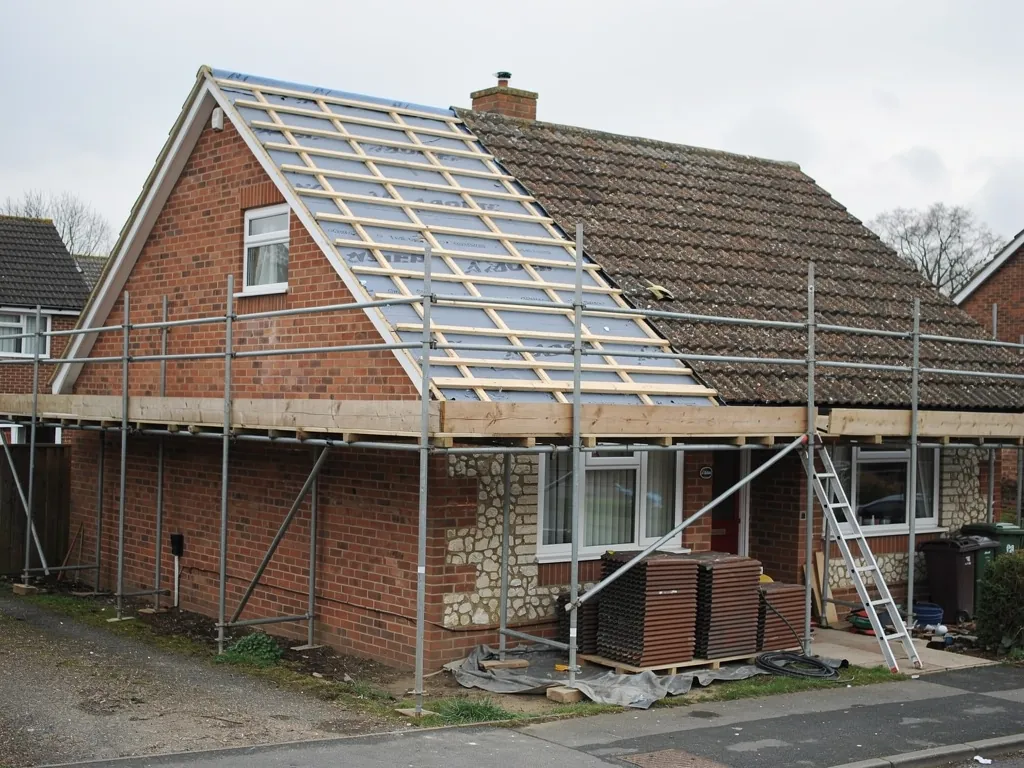
Why summer is popular and what it costs you
Long days and a run of dry weather are what every roofing job wants. In summer the crew can start early, finish late and strip a whole slope with a good chance of getting it covered before dusk. Dry surfaces matter for several of the tasks, and warm weather makes membranes and sealants easier to work.
The other side of the picture is demand. Many householders put off a roof until the weather improves, so good dates in the warmer months tend to be booked well ahead, and there is less room to choose your dates. A roof you commission in March for a July start has a far better chance of landing on the date you want than one you start thinking about in June.
Is summer weather always kind to a roof?
Not entirely. Slates and tiles can be hot to handle in strong sun, and a prolonged heatwave can soften felt and bitumen so that they scuff underfoot. Thunderstorms in warm spells arrive quickly and with little warning, which is why a roofer watches the sky as closely in July as in January. A dry forecast helps, but it never replaces the habit of never leaving the house open overnight.
What spring and autumn offer
Spring and early autumn often strike the best balance. Days are long enough to make progress, temperatures are moderate for both the people and the materials, and the diary is usually less crowded than in the height of summer. Showers are more frequent than in a settled summer, but they are the sort a roofing crew plans around.
Autumn has one extra consideration. Leaves and wind-blown debris collect in valleys and gutters, and a new roof is a sensible time to clear and renew them. Our page on fascias and gutters during a re-roof explains why that work is best tackled in the same visit as the new covering.
Should I wait for the storm season to end?
If the roof is leaking, no. A leaking roof is a reason to act, and a leak gets made safe first, with the replacement following once the survey says it is time. If the roof is sound but ageing, there is no harm in picking a calmer part of the year, but waiting through a winter with a failing covering can turn a repair into a wider replacement because water damage spreads to battens and rafters.
Cold, damp mornings can also hold a start back, since slate and tile are slippery until the surface has dried. That costs an hour or two rather than a day, but it explains why a winter timetable always carries some give. Wind deserves a separate mention. The danger of strong wind is less to the roof itself and more to the loose materials on it. Sheets of underlay, stacks of tiles on a scaffold lift and large offcuts all become hazards in a gale, so work stops when the wind rises beyond what can be managed safely, whatever the date on the calendar.
Replacing a roof in winter
Winter is the season people rule out and, for many roofs, shouldn't. The practical limits are shorter daylight, colder materials and more rain. None is a barrier, and each can be worked with.
How does frost affect the work?
Frost matters most where mortar is involved. Fresh mortar on ridges, verges and flaunching needs to cure without freezing, and a hard frost overnight can damage it before it has set. BS 5534, as revised in 2014, already expects ridge and hip tiles to be clipped or screwed down as well, and dry-fix systems made to BS 8612 suit cold weather well, since it uses clips and seals instead of wet mortar. Work that depends on wet mortar waits for a mild spell.
Does cold weather change the choice of covering?
Natural slate and clay or concrete tiles are laid dry onto battens, so they are largely unaffected by a cold day provided the surface is not icy. Frost on a roof makes the slope slippery and dangerous, so the crew starts once it has cleared. The materials that dislike cold are the adhesive and membrane systems used on flat roofs, which need dry, clean, reasonably warm surfaces to bond properly. A flat roof is best timed for a dry spell, and in winter we plan it around the forecast.
Rain on a winter job is more of a nuisance than a threat, because the method already assumes it. Underlay goes down as each section is stripped, and the finished covering follows as soon as the timbers beneath are sound. Cold hands are the other cost, and slower work with gloves on is part of why winter days produce a little less than summer ones. Daylight is the plain constraint. A short day means a smaller area stripped and covered in one visit, so a winter job can run longer in calendar terms even though the amount of work is the same. Our guide to how long a re-roof takes covers the typical sequence.
Lead times: when to ask and when to expect a date
Weather decides whether a day is workable. The diary decides when the job can start at all, and the two interact.
Demand for roofing is uneven. It tends to rise after stormy spells, when many roofs reveal their problems in the same weeks, and it eases when the weather turns cold and settled. That means the gap between asking for a quote and seeing a crew can vary a good deal across the year. We prioritise leaks and storm damage, so a roof already admitting water moves up the list, while a planned replacement on a sound roof is scheduled around the work that cannot wait.
One practical point catches people out. The date of the survey is not the date of the job, and the gap between the two is where material orders, scaffold bookings and any planning or building control questions get settled. Treat the survey as the start of a short project, not a single appointment.
How far ahead should I enquire?
If you want a specific month, ask a few months before it. The survey comes first, then the written quote with its photographs, and materials are ordered once you accept. Natural slate, clay tiles and reclaimed material can take longer to obtain than common concrete tiles, so a roof with an unusual covering needs a longer runway. Stone slate for a period house can take longest of all, and the best time to start asking is the winter before a summer job.
The calmest time to decide on a roof is a time when nothing is dripping. A survey arranged in a quieter month leaves you free to pick your own date.
If you are fitting solar panels, the timing links to the installer's own diary, and our page on re-roofing with solar panels explains how to line up the two trades.
How a roof is kept dry while the old covering is off
This is the question behind the question. Nobody minds the month if the house stays dry, and a well-run job is built around exactly that.
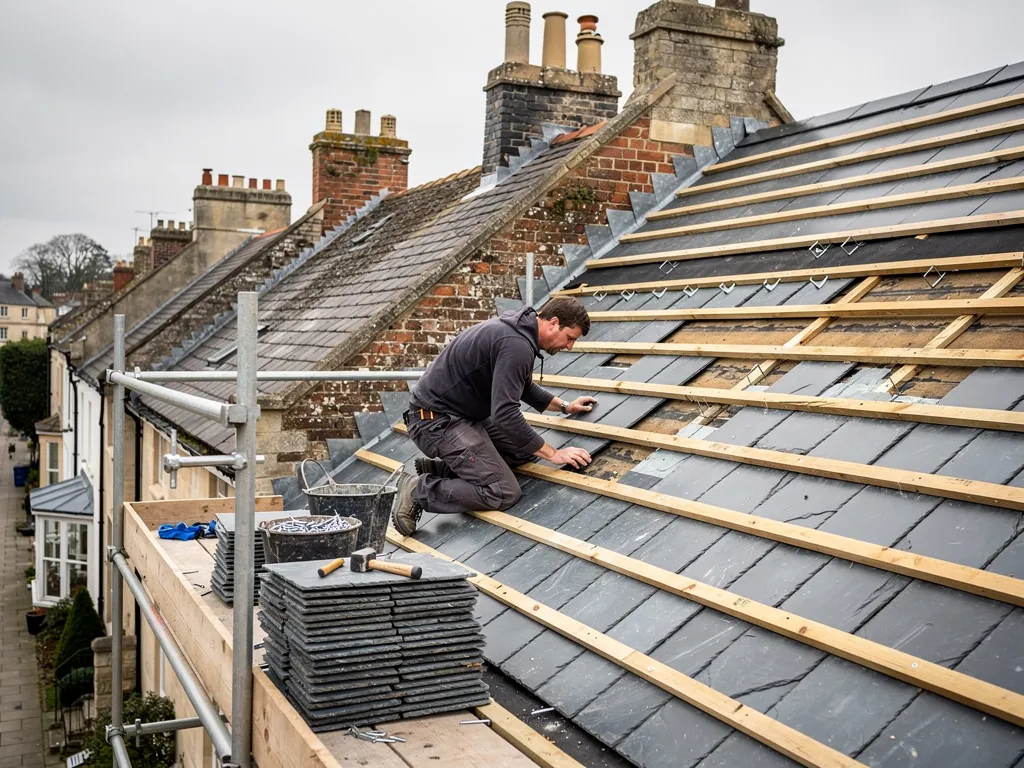
The first principle is to strip in sections, never the whole roof. A crew removes one area of covering, repairs any timber, lays the underlay and battens and fixes enough of the new covering to make that area watertight before moving on. The amount opened up each day is set by the forecast and the hours of daylight, which is why a winter job proceeds in smaller bites.
What stops rain getting in overnight?
Whatever is open when the crew leaves is covered. That means heavy-duty tarpaulins or temporary sheeting fixed down against wind, with the edges weighted or battened so they cannot lift. The underlay does part of the work too. A new membrane laid over the rafters is itself a waterproof layer, although it is a temporary protection and the finished covering does the real job.
What if a storm comes mid-job?
The crew stops, secures what is open, and checks it again before leaving. Where the roof is a terrace or a tight spot with neighbouring houses, the party wall edge and any open chimney work get particular attention. Our page on re-roofing a terraced house goes into how shared walls change the planning, and the guide to re-roofing around a chimney covers the stack, which is the most exposed part of an open roof.
Heavier coverings and other reasons to choose your month
Sometimes the covering sets the schedule. If you are changing to a heavier material, for example from tiles to natural slate or stone, the structure may need checking first. On weight, the Planning Portal says a covering that is 15 per cent or more heavier needs approval, while Approved Document A sets its test at a loading increase of more than 15%, so there is a question to settle before anyone orders stock. That check can take time, and it is better done in a quiet month than discovered on the day the scaffold goes up. Our guide to fitting a heavier roof covering explains the test.
A few other things push a date earlier or later. Planning an extension or loft conversion, a house sale, a school holiday week when you want the house quiet, or the end of a guarantee on some other work all matter more than the weather. Being flexible costs nothing, and a good roofer will tell you plainly if waiting a few weeks gives a better result.
Whichever date you pick, our fitting carries a ten-year written guarantee, and when the crew leaves the site is tidy and the old material gone. Our page on roofing in the rain explains what happens when the forecast changes, and the main roof replacement page sets out the whole job.