
Overcladding means fixing a new roof sheet over the old one instead of taking the old one away. On a garage or outbuilding roofed in asbestos cement the attraction is easy to see. The old sheets stay put, nothing is broken up and there is no hazardous waste to arrange. Encapsulation is the lighter cousin of the same idea: the old sheets are cleaned and sealed with a coating that locks the surface down.
Both routes leave the asbestos in place, and both have a proper use. Neither is a way round the question of what condition the sheets are in today. This guide explains how each method works, what it asks of the roof structure underneath, where it tends to go wrong and when removal turns out to be the better spend. If you are not yet sure your sheets contain asbestos at all, begin with our guide on how to tell whether a garage roof is asbestos.
What overcladding and encapsulation actually involve
The two methods get lumped together, but they are different jobs. Encapsulation is a surface treatment. The sheets are cleaned, any moss and lichen is dealt with, and a sealing coating is applied across the surface and the fixings. The roof looks tidier and the coating binds the weathered face of the cement so that loose fibres are less likely to shed. Nothing is added to the structure, so the weight barely changes.
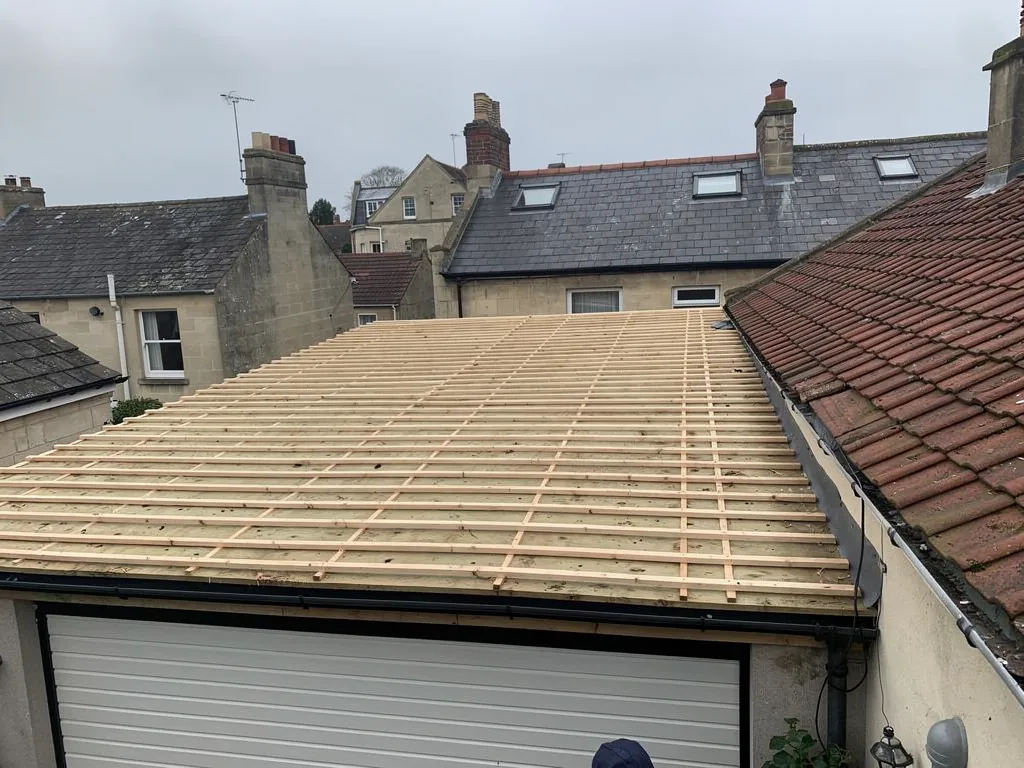
Overcladding adds a second roof, and our garage roof replacement work often starts with deciding whether it is the right one. New sheets, usually profiled steel or a coated metal sheet with an anti-condensation backing, are fixed over the top of the old ones. Because the new sheets need something solid to fix to, the screws normally run down past the old sheet into the purlins, which are the cross members, in timber or steel, that carry the roof. Longer fixings, spacer pieces and sometimes a layer of timber battens on top of the old crests make up the difference in height.
The old sheet becomes a hidden layer. It no longer sheds rain, it is out of sight and out of reach, and nobody will touch it until the day the garage is demolished or the overcladding is stripped. That last point is the one to hold on to, because it decides whether the method saves money or only moves it.
Which one suits which roof?
Encapsulation suits sheets that are sound but tired: stained, mossy, with sealed rather than split joints. Overcladding suits roofs where the sheets are sound enough to stay but the owner wants a new weathering surface, better insulation against condensation or a different look. Neither suits sheets that are cracked through, holed or crumbling at the edges.
When the old sheets are sound enough to cover
HSE guidance tells owners to assume that any building built or refurbished before 2000 may contain asbestos. Fibre cement garage roofs from the middle of the last century are a typical example. In good condition, asbestos cement is a fairly stable material, because the fibres are held within the cement matrix. The trouble starts when the surface is damaged, drilled, broken or abraded, which is exactly what fixing a new roof over it can do.
So the first question is the sheets themselves. We look for cracks running across a sheet, corners that have dropped away, holes where a branch or a ladder has gone through, and bolt holes that have elongated. A sheet with a few weathering stains and surface moss is a different proposition from one with a long split. From inside the garage we study the underside too, where daylight, rust-stained fixings and dripping stains show where water has been getting through.
If a sheet is already substantially damaged or broken up, covering it is no longer the simple option. Work on broken asbestos cement roofing falls into HSE's notifiable non-licensed category, which brings notification and medical surveillance duties for whoever carries it out.
Where the sheets are sound, the second question is whether they will stay that way once fixings are driven through them. Every fixing hole is a small point of damage. A roof that has been standing for fifty years may be brittle enough that the vibration of a drill is the thing that cracks it. Our guide to fibre cement sheets explains how the material ages and what the common failure patterns look like.
What the structure underneath has to carry
Asbestos cement sheets are comparatively light, and garage roof frames were designed around that. Overcladding doubles the number of layers, so the load on the purlins, the walls and the gable ends goes up. Steel sheeting is light for its size, but the battens, brackets and fixings add weight, and snow or a person on the roof adds more.
Planning Portal guidance names a covering that raises a roof's weight by 15 per cent or more as grounds for a building control application, and Approved Document A, for its part, treats an increase in loading above 15% as significant. Overcladding is a different operation from stripping and recovering, but the principle carries over: a roof that was sized for a light covering should be looked at before more is put on it. Where there is doubt, a structural engineer or surveyor should look first, as the Planning Portal suggests.
Do garage purlins usually need checking first?
Yes, and the check is simple. We look at the purlin spacing against the profile of the new sheet, because the sheet manufacturer sets a maximum span. We look for sag between supports, rot where the purlins bear on the wall plate, and rusted brackets. A sagging purlin under an old sheet is a sign the roof was already near its limit. Fixing a new sheet to a rotten timber is a repair that tends to fail within two or three winters.
Does the fire performance matter?
It can. Approval is also triggered, says the Planning Portal, when a new covering will perform very differently in a fire. For a detached garage a good distance from a boundary this is rarely a problem, but a garage built hard against the neighbour's fence is a different case, and the survey notes it.
Preparing the surface without making things worse
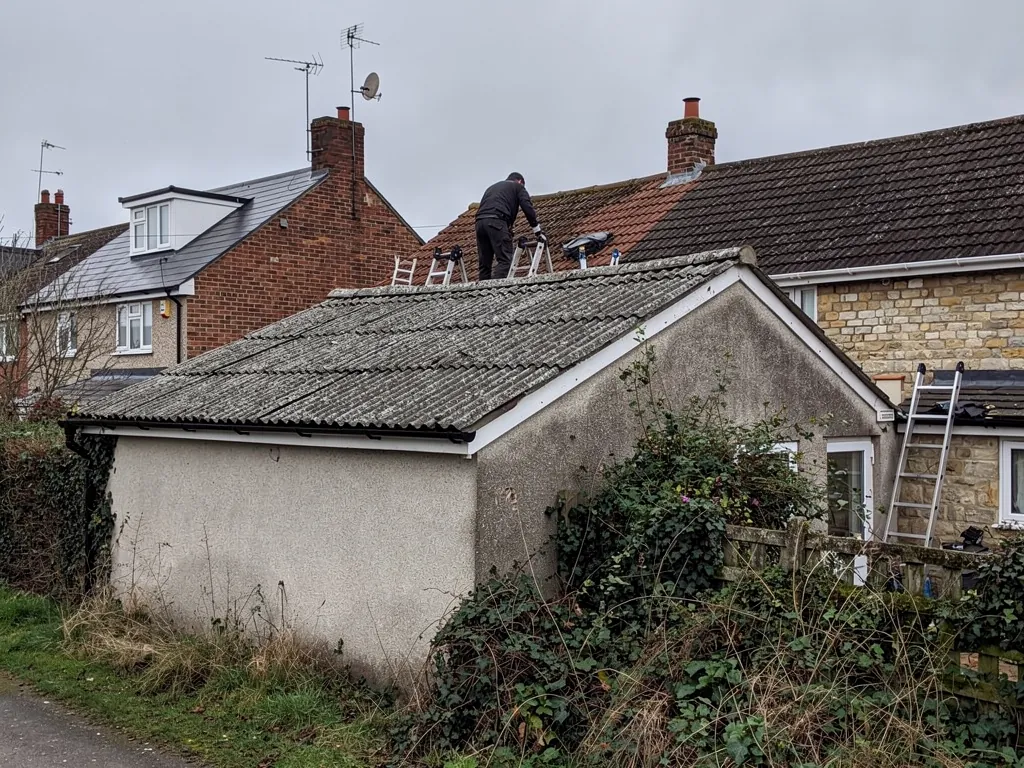
The risky part of both methods is the preparation. Asbestos cement roofs collect moss, algae and lichen, and cleaning them is the obvious first step before sealing or covering. The way the cleaning is done matters more than the cleaning. Wire brushing, scraping with a hard tool or blasting with a pressure washer abrades the weathered face of the sheet and can release fibres into the air and wash them into the gutters, onto the lawn and across the driveway.
This is why we ask any roofer proposing encapsulation exactly how they intend to clean the roof, and what happens to the run-off. A gentle approach with a biocide and soft tools, keeping the surface wet, is the sort of method that fits the job. A roofer who plans to blast the sheets clean in an afternoon is describing a different job.
Fixings need the same care. Drilling through asbestos cement generates dust unless the hole is made with the right bit and technique, and the old bolts and washers are often corroded into the sheet. Some contractors fix new sheets without touching the old by laying them onto timber or steel brackets attached to the purlins from the side, which keeps fixings away from the old face altogether. Others go through the old sheet and accept the damage as a small cost.
Because of this, think twice about a quote for a quick over-roof that makes no mention of how the old surface will be treated. The answer you want is specific: the cleaning method, the fixing method, and where the waste water goes.
Where overcladding earns its keep and where it does not
The honest case for overcladding is simple. It avoids breaking up the existing sheets, it costs less than a full strip where the strip is the expensive part, and it can be done in a shorter visit. A garage with sound sheets and a sound frame, owned by someone who expects to keep the building for years, is a reasonable candidate. The new surface also fixes the practical complaints that often prompt the job, such as leaking joints, green growth and cold condensation dripping from the underside. An anti-condensation backing on the new sheet does something the old fibre cement never did.
The case against is also simple. The asbestos is still there. It sits under a new layer, and anyone who later strips the roof, converts the garage or demolishes it deals with the old sheets then, usually with the new sheets on top to be removed first. The saving today becomes a larger job later. A buyer's surveyor may also want to know what is under the new roof, and a seller who has to explain that the asbestos was covered over rather than removed may meet a harder negotiation. Our guide to garage conversion roofs shows why a planned conversion makes overcladding a poor choice: the roof is rebuilt and insulated anyway, and the old sheets have to go.
What does removal cost by comparison?
Published price guides show the gap. MyBuilder (updated 21 August 2026) puts single garage roof removal at £350 to £1,295 and a double garage at £650 to £1,800, while Checkatrade suggests budgeting £950 to £3,750 for removal and disposal of an asbestos garage roof. Those are national typical ranges, and your own figure is fixed once we have surveyed the roof. Size, access, the fixing method and disposal drive it.
Removal, and what the waste route looks like
Taking asbestos cement sheets off carefully is work HSE describes as non-licensed, provided the material is handled and removed without being broken up. That includes asbestos cement that is weathered but not otherwise substantially damaged. The sheets come off whole, are wrapped and sealed, and leave the site as hazardous waste. A contractor who collects asbestos from a domestic property must consign it and complete the waste consignment note as the producer, so a tidy paper trail is part of a proper job. Our guide to the asbestos removal process covers the order of work.
Removal has one big advantage over covering: it ends the question. Once the sheets are gone, the new roof is just a roof. It can be insulated, converted, extended or sold without any footnote. The disadvantage is the up-front cost and the disruption of a few days, and in a few cases the structure turns out to need repair once the sheets are off.
Can a garage roof be part overclad, part removed?
Occasionally. Where a roof has one good slope and one bad one, the bad slope can come off and the good one be sealed in place, though the two surfaces then need a clean junction. It is worth asking, but we would not suggest it where the sound slope is also nearing the end of its useful life.
Whichever way you go, the new covering, the structural check and photographs of the roof all feed the quote, and our 10-year workmanship guarantee is in writing. We try to propose only the work that genuinely solves the fault, which for some roofs is encapsulation and for others is removal.