
Waking up to a tree across the roof is alarming for anyone. There is a noise, a crack in the ceiling, perhaps a gap where the sky should not be. The scene looks chaotic, but the right response is orderly, and most of the cost of getting it wrong comes from rushing at the wrong step.
The tree itself is often doing a job. A trunk resting across a broken rafter or a snapped purlin can be holding up part of the roof, and cutting it away without a plan can drop the load onto the house. A branch resting on a service cable can be live. The tree surgeon, the roofer and the insurer all have a part to play, and the order matters. This guide sets out that order, from the first five minutes to the point where the last coat of paint goes on. For the wider picture of weather damage, see our emergency roof repairs section.
The first five minutes: people, power and gas
Account for everyone in the house, then leave the part of the building under the tree. If a ceiling is cracked or sagging, if you hear creaking or see daylight where there was none, move to a room away from the impact and, if in doubt, go outside. Call 999 if anyone is hurt or if the structure looks unsafe.
Look for cables. A tree that has come down may have dragged an overhead electricity line, a telephone line or a service cable to the house. Treat all of these cables as live, even if the lights have gone out, and keep well back. Contact the electricity network operator for your area, and the fire service if the situation looks dangerous. Do not try to move a branch that is touching a cable.
What if I smell gas?
If the tree has pulled at a gas pipe, a flue or a meter box, the risk is serious. Open doors and windows if it is safe to do so, do not use switches or naked flames, leave the building and ring the national gas emergency line from outside. A roofer cannot start work until the gas supplier has made the property safe.
Is the water supply at risk?
Check the cold water tank in the loft if you have one, and any pipes near the damage. A cracked tank or a split pipe can add a flood to the problem. If water is gushing, shut the stopcock, usually under the kitchen sink, and turn off the electricity at the consumer unit if water is near any fitting and you can reach the unit without crossing wet floors.
Judging structural damage from the safe side
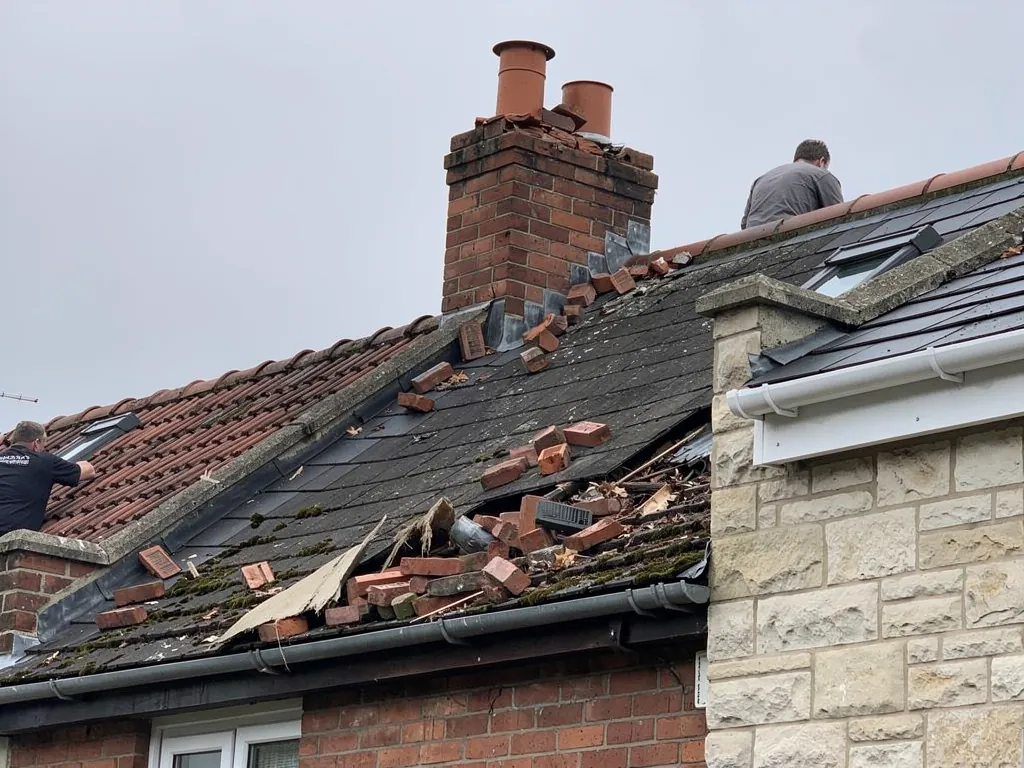
You are not trying to diagnose the building, only to decide whether it is safe to stay in. Look from the garden first. A trunk that is lying on the roof surface with broken tiles beneath it is one situation. A trunk that has gone through the covering and sits on the ceiling joists is another. A roof that has visibly sagged, a ridge that has dipped or a chimney that leans point to structural movement.
Inside, look for a crack that runs along the wall where it meets the ceiling, doors and windows that suddenly stick, plaster that has dropped, and gaps opening at the corners of rooms. These signs say the frame has moved. They are reasons to stay out of the room and ask for professional help, not reasons to push a door open or prop up the ceiling yourself.
Should I go into the loft to look?
Not if the tree has come through. Roof timbers that have been struck can be cracked in ways you cannot see, and a person standing on joists that are carrying extra weight adds to the load. The loft is the place where the damage is greatest and the footing least reliable. Wait until a roofer or structural engineer has looked.
Our guide to the kinds of storm damage a roof can suffer shows how impact damage differs from wind lift and from water ingress, and why the three need different repairs.
Who to ring, and in what order
Once everyone is safe, ring your insurer. Most policies ask for early notice, and many insurers run a claims line at all hours. Tell them what happened, where the tree landed and whether you are able to stay in the house. Ask what they need from you before temporary work starts and whether they have a preferred contractor, and ask what the policy says about who removes the tree.
ABI advice issued for Storm Eunice in 2022 was to contact the insurer early, to limit temporary work to what stops the damage spreading, to clear it with the insurer beforehand and to keep the paperwork for anything you spend. That is a sound pattern for a tree strike too. What a policy pays for turns on its wording and the facts. When complaints reach the Financial Ombudsman Service, it looks at whether the storm itself caused the damage.
Next, ring a roofer to make the building safe and weatherproof. Give them your photographs. Describe what the tree is resting on, what is visible from the garden, and whether anyone has been into the loft. You can reach us on 01793 626096 or by WhatsApp, and water coming in jumps the queue ahead of routine jobs.
Whose tree is it?
If the tree came from a neighbour's garden or from land owned by someone else, tell your insurer and take photographs of the stump or root plate if you can reach it safely. Who is responsible can depend on the state of the tree beforehand and on what the owner knew, and that is a matter for insurers and, where necessary, legal advice, not for the roofer. Our guide to wear and tear claims explains why the condition of the building before the storm can matter to an insurer.
Tree removal comes after the structure is understood
The usual instinct is to get the tree off as soon as possible. The better order is to understand what the tree is doing first. A trunk that has broken a hip rafter and bridges the gap is carrying part of the roof, and lifting it without temporary support can bring more of the structure down. Removing the weight in the wrong order can also swing the tree and damage more tiles, a gutter or a neighbouring property.
A sensible sequence has the roofer or structural adviser look first, then place temporary props or a protective deck where needed, then bring in a tree surgeon who can cut and lower the tree in sections with the load controlled. For a large trunk over a roof, a crane is occasionally the sensible choice, and the cost of hire is another point to raise with the insurer in advance. A small branch on tiles is a different matter, and a roofer can often lift it clear with the roof checked over in the same visit.
Can I cut it up myself?
We would not advise it. A tree under tension can spring when cut. Chainsaw work at height or from a ladder is among the most dangerous jobs a homeowner can take on, and a mistake can add injuries to a damaged roof. Hire a qualified tree surgeon, and keep a clear zone around the working area.
Is the tree protected?
Some trees are protected by an order, or stand in a conservation area, and in many cases the council must hear about work first. Emergencies are treated differently, so ask the council's tree officer and give the tree surgeon the address and the reason.
Making the roof safe and weathertight
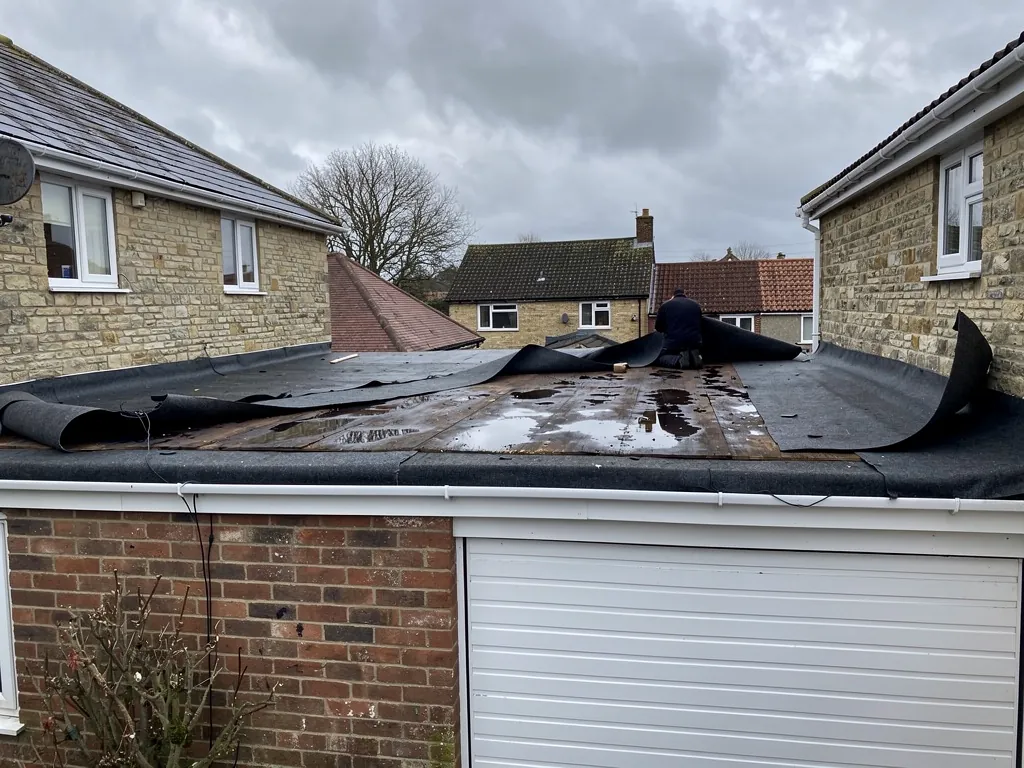
The first job on the roof is not a repair. It is to keep the rain off a building that is already wet. A roofer will usually survey from a ladder or a scaffold, take photographs, and fit a temporary covering over the opening, using sheeting and battens, or boards and a membrane, depending on the size of the hole. The cover has to be fixed to sound timber and has to cope with wind, which is why a loose tarpaulin held by bricks is not the answer. Our guide to storm season preparation includes what to keep ready, so that cover can be organised faster next time.
If the structure is badly hurt, temporary props may go inside as well, from the floor below, to carry the load until permanent timbers replace the broken ones. These are placed by someone who understands the loads, and they stay in place until the permanent work is complete. If the damage is large, a structural engineer may be asked for a report, which the insurer is likely to want in any case.
How long can a temporary cover stay on?
It depends on the cover, the weather and the position, so ask your roofer when they fit it. A cover is meant to buy time for scoping, insurer agreement, materials and the permanent work, and no cover is a substitute for the repair. Keep an eye on it after high winds and check the loft or ceiling beneath for damp.
The repair sequence, step by step
With the tree gone and the roof weathertight, the permanent repair can be planned. The order is the one a building follows from the inside out. Damaged rafters, purlins or ceiling joists are assessed first, and cracked or broken timbers are repaired with new sections or sistered alongside the sound ones. Where the damage is structural, building control may need to be told. Swindon Borough Council runs its own building control, and a registered building control approver is the private route. Notifiable work is explained to you and we deal with the notification.
Then come the battens and underlay, which are replaced across the damaged zone and lapped properly into the sound areas. After that, the covering goes back. Matching the old tiles or slates may take time, especially with clay peg tiles and natural slate, so identify the covering early. Valleys, hips, ridges, flashings and gutters that were knocked in the fall are checked and reinstated. Last, the ceilings, insulation and decoration indoors are dealt with, after everything has dried.
Do I need to hold off repairing until the insurer has seen it?
It depends on the insurer, so ask them before anything beyond emergency work begins, and keep photographs of the damage before and after each stage. Our page on repairing before you claim sets out why the order matters.
After the survey you get photographs and a written price. We would rather do the modest job that truly cures the damage, be that a patch of battens and slates or a whole section of roof. Our workmanship is guaranteed for ten years, on paper, and you are not left with rubbish in the garden.