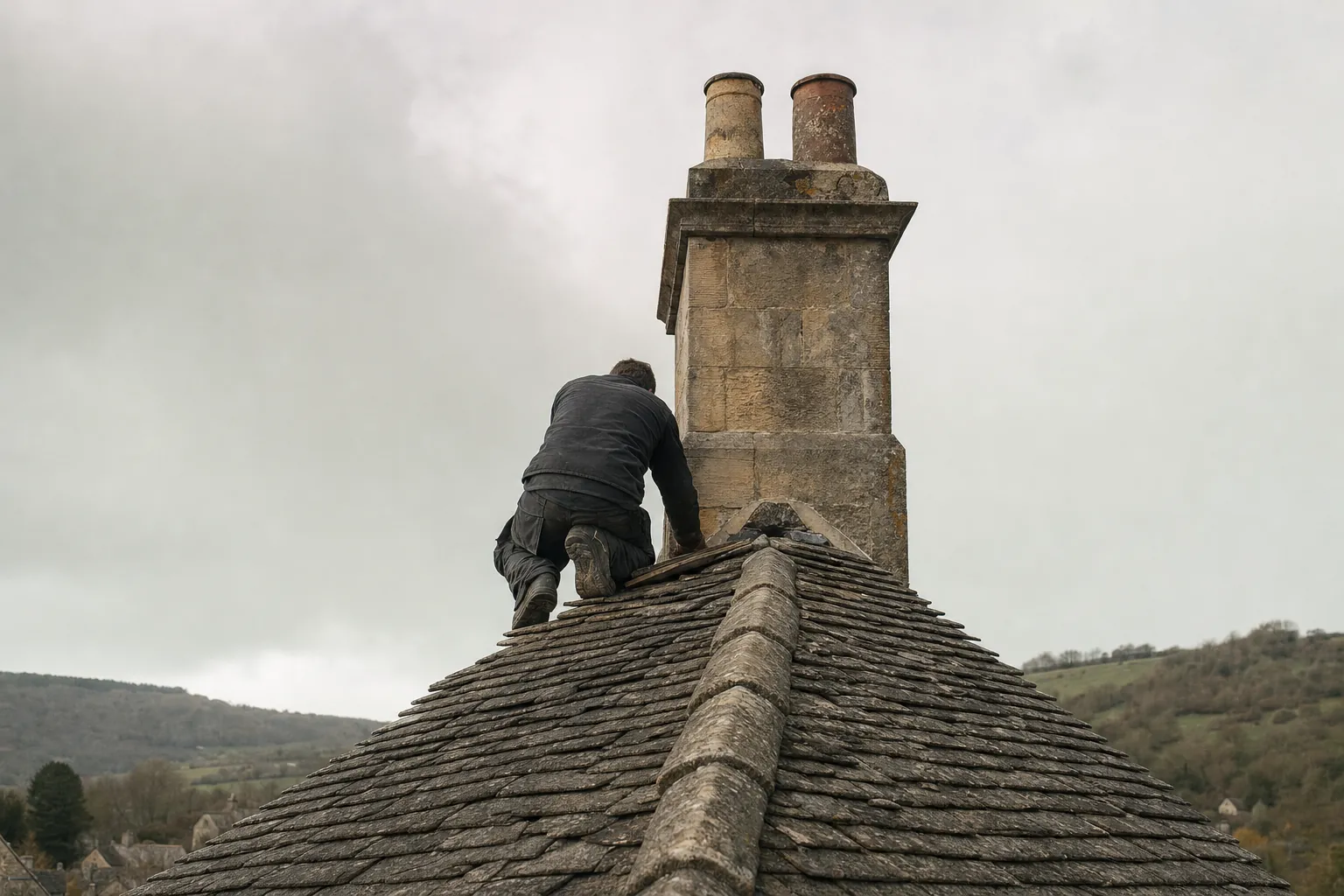
Reclaimed stone has a reputation as the authentic choice. The picture is more complicated, and it is worth knowing why before you ask anyone to quote for it. The guidance we follow is Cotswold District Council's technical note on stone slate roofing, which reproduces English Heritage policy.
Q2.1Why is second-hand slate a problem?
The note observes that buying and selling old slates has stripped many other buildings of theirs, sometimes through theft. Every slate on offer came off a roof. If that roof was in a village like Sapperton, the building lost something it cannot easily replace. The policy answer is to use new slates, cut to match, and keep any old ones on the building that owns them.
Q2.2Can limestone and sandstone slates be mixed?
Limestone and sandstone slates should not be swapped for one another or laid side by side, because they weather differently and show it within a few seasons. Artificial substitutes, including concrete and reconstituted stone, are described in the same note as unsuitable for historic buildings, and sawn stone can look wrong and wear unevenly. Whatever the roof is made of, the sensible rule is to repair with the same thing.
Q2.3What does that mean for my own roof?
We lift sound slates carefully, sort them by size, and re-hang them in their courses. Where there are gaps, we make them up from new stone matched in colour, thickness and size. If an earlier owner used something different, we talk through the choices with you, and with the council if the building is listed. Our roof repairs page explains how a small fix is separated from a larger one, and the written quote comes after we have surveyed the roof.