The short answer
Find the cause before choosing a fix. A single split or lifted seam can be patched, but a roof that holds standing water, feels soft underfoot or has failed in several places is usually better re-covered, with the deck and falls put right at the same time.
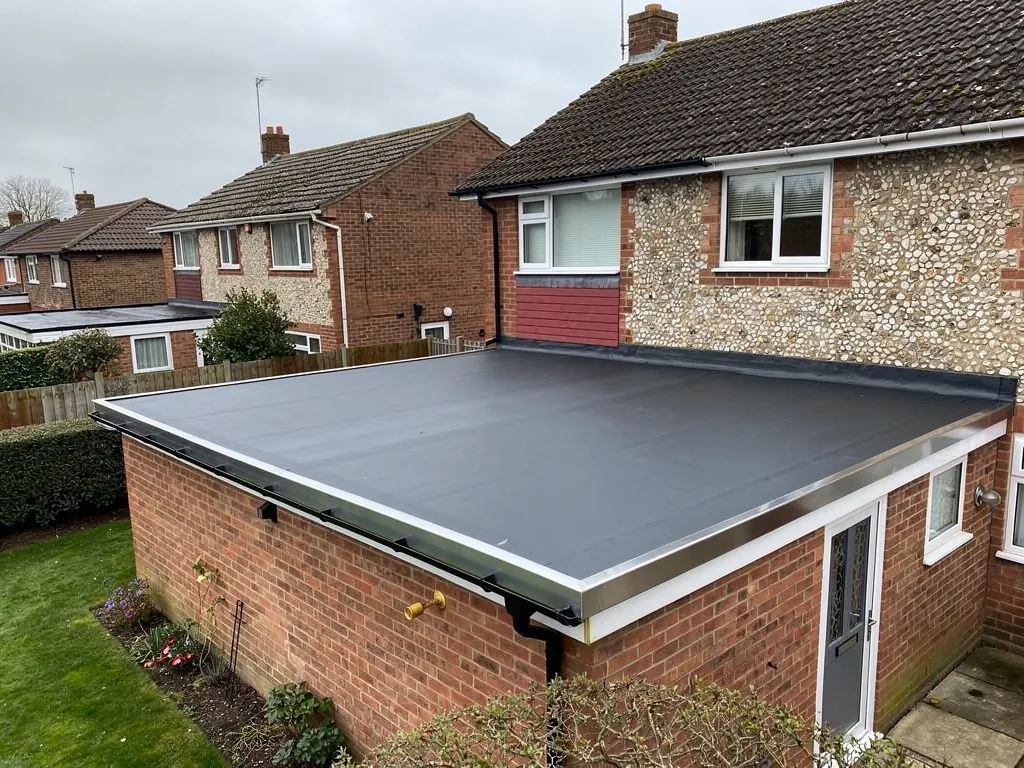
Many Clanfield houses have a kitchen extension, garage or porch with a roof that is flat or only gently pitched. These small roofs are easy to forget until a stain appears on a ceiling, and by then the deck beneath may already be wet. A short, early look costs far less than replacing rotten boards and joists. The work we do on a re-covered roof like this carries our written 10-year workmanship guarantee.
Q3.1What does a survey look for?
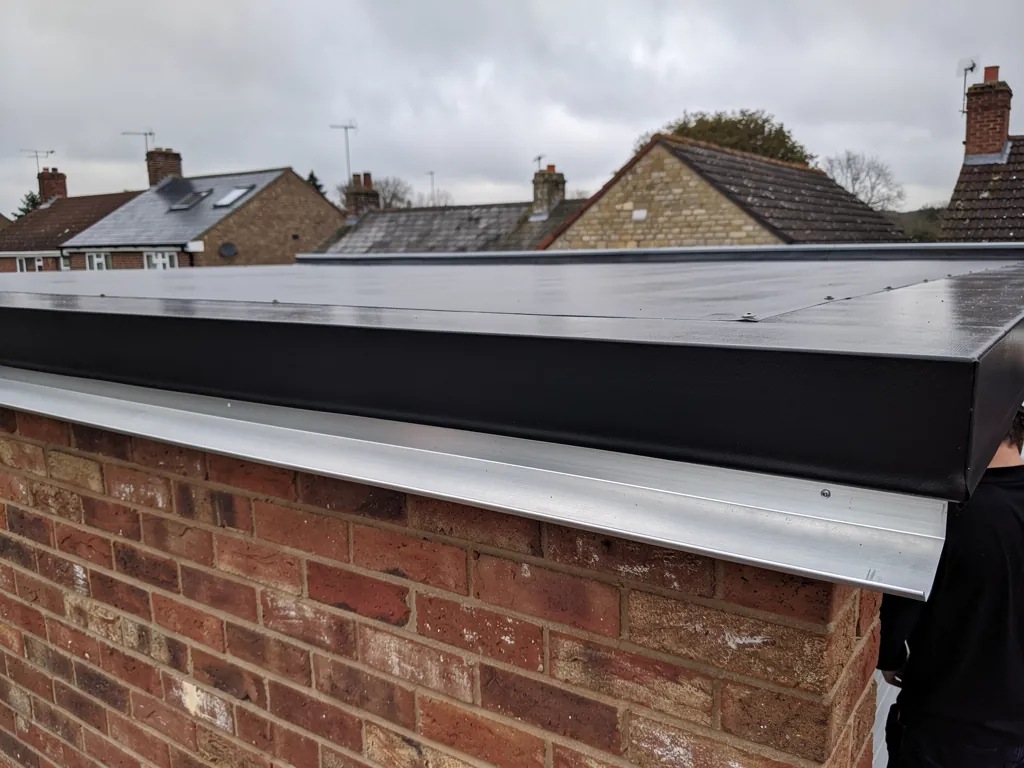
We check the surface for splits, blisters and open seams, then the edges and upstands where the roof meets a wall, because that is where most leaks begin. We press the deck for softness and note any pools that stay behind after rain. Ponding is a sign that the fall, the gentle slope towards the gutter, is too shallow, and a membrane laid over it will keep ponding.
Q3.2Patch, overlay or replace?
A patch suits a single, clear fault on a roof that is otherwise sound. Replacement suits a roof that is blistered, soaked or past its typical life, which MyBuilder puts at 15 to 30 years for flat roofs in general. When a roof is re-covered we usually recommend new boards where the deck is wet, a proper drip edge and new flashings, and when the job is finished the old boards and membrane leave with us. Dust and offcuts do not stay behind in your garden.
Q3.3Which covering should you choose?
EPDM (a synthetic rubber sheet), GRP (glass-reinforced plastic, often called fibreglass) and felt each suit different jobs. Our flat roofing page compares them. Wherever a flat roof meets a stone wall, the junction detail matters as much as the covering itself, and it is the part we photograph most closely.