
A roof window that is fogged, rotten at the sill or past repair does not always mean a new hole in the roof. When the new unit is the same size as the old one, the rafters stay as they are and the job is a swap in the existing opening. That makes it quicker and tidier than a first-time installation, and the plasterboard reveals around the window can usually stay as they are. It is one of the smaller jobs in our skylights and roof windows work.
The detail that decides whether it goes smoothly is small: the size code on the old unit, the condition of the timbers it sits on, and a flashing kit made for the new window and your roof covering. This guide covers each of those, plus what the thermal rules say about a replacement and when a swap turns into something bigger. If the problem is a leak rather than a tired window, start with tracing a leaking roof window, because a failed flashing is cheaper to fix than a whole window.
When a swap-out is the right answer
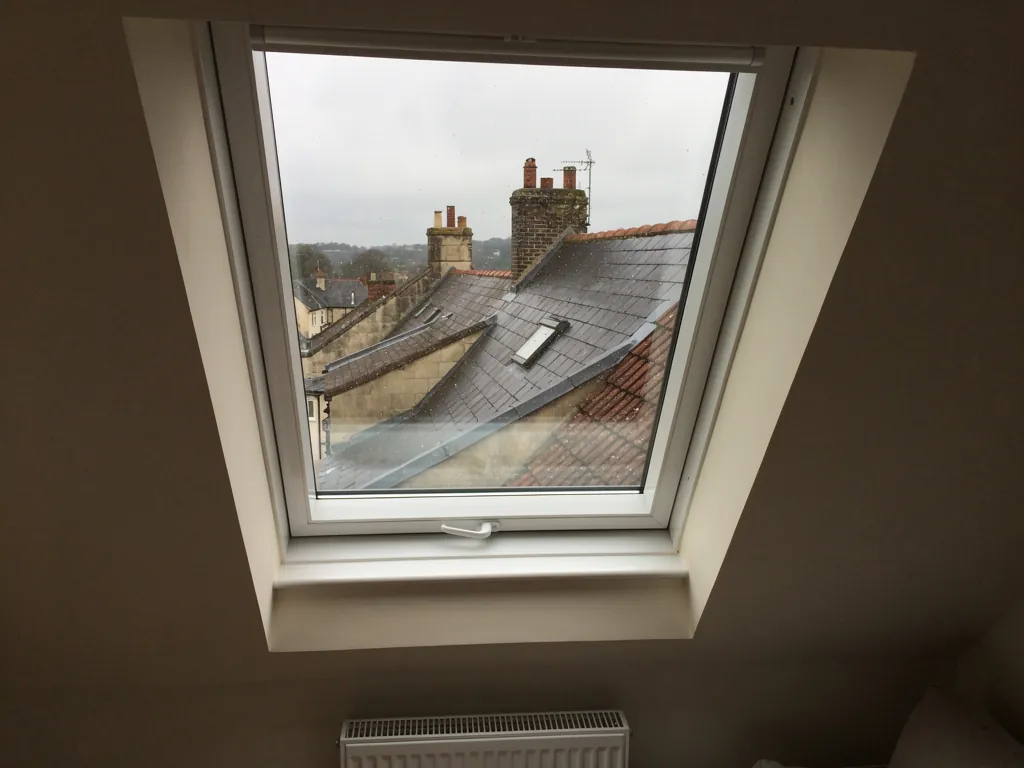
Replacement makes sense when the window itself has failed and the roof around it has not. Typical signs are misted glass between the panes, where the sealed unit has lost its seal, a timber frame that has gone soft at the bottom edge, an opening mechanism that no longer holds the sash in position, or a window that is simply too old to take a modern blind or a decent seal. A cracked pane on its own can sometimes be dealt with by replacing the glazing unit alone, and our note on broken roof window glass explains that route.
Replacement is the wrong answer when the water is coming in from somewhere else. Many windows get condemned for a leak that was really a perished flashing, a slipped slate beside the frame or condensation running down the glass. A new unit dropped into a flawed surround tends to leak in the same spot within a season, so we look at the surround before anyone orders a unit.
Is the old window worth keeping?
If the frame is sound and only the glass has failed, a glazing swap costs less than a full window and keeps the original flashing in place. If the frame has rot at the corners, or the pivot hardware has worn, replacing the whole unit is the better use of the scaffold.
Ask for the survey photographs of the window and the roof around it before you order anything. They show whether the fault is the window or its surround.
Reading the size code before you order
Roof window makers label every unit with a code, usually a two-letter prefix followed by two digits, which stands for the width and height of the frame. The label is normally on the sash edge or the frame, and a photograph of it is the quickest route to the correct replacement. The code is the maker's own shorthand, so the same letters mean different dimensions from one brand to the next. Never assume a code from another make will fit.
Several things sit alongside the code and change which unit suits:
- The opening style: centre-pivot, top-hung, or a combined top-hung and pivot arrangement.
- The glazing: standard, laminated for safety or noise, or obscure.
- The roof covering the unit is set into, which decides the flashing kit.
- Whether the old window was manual, electric or solar powered.
It is common to find a house with several windows of different ages, and a code found on one will not necessarily match its neighbour. Measure the actual opening as a check on the label, because a window painted over or altered by a previous owner may not be what the label says.
What if the old code cannot be found?
Labels fade, get painted over, or disappear when a frame has been refinished. In that case the opening is measured from the rafters and the old frame, and the nearest standard size is chosen. If no standard size fits within the existing rafters, the swap becomes a trimming job, which our guide to trimming rafters for a roof window explains.
The flashing kit makes or breaks the job
The flashing is a set of metal pieces that closes the joint where the frame meets the covering. Each kit is designed for one family of coverings: a kit for flat concrete or clay tiles will not seal around plain tiles, and a slate kit does not suit a deep profile pantile. It is also made for one frame size, so an old kit cannot be reused on a new window of a different make.
The kit is also where most poor swap-outs go wrong. A common shortcut is to refit the new window into the old flashings and fill any gaps with sealant. It looks fine on the day, and water finds its way in during the first winter. Fitting a new kit means lifting the tiles or slates around the opening on every side, bedding the new pieces with the correct laps, and relaying the covering over them.
Why is the lead or aluminium apron so important?
The apron sits at the bottom of the frame, where water running down the roof first meets the window. It takes the full flow and sends it round the sides. A cut corner here shows as damp on the plaster below the sill, which is easy to mistake for condensation.
Where the window sits close to a valley, a ridge or a chimney, the neighbouring detail can interfere with the kit. A surveyor who has seen those junctions up close will spot a clash before the window arrives. Our page on roof window flashings goes through the kit types.
What the old frame is sitting on
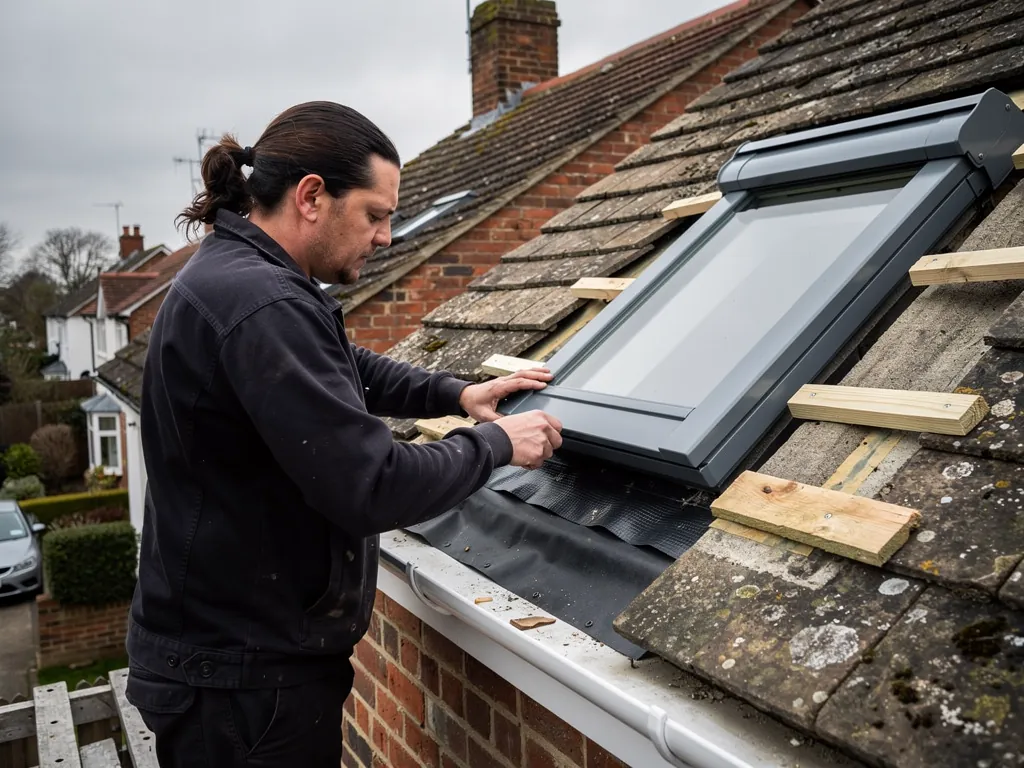
Behind the window frame there are timbers: the rafters either side and the trimmers above and below the opening, which carry the load around it. These matter more than the window. Where a leak has run on unnoticed, the bottom trimmer is usually the first thing to go soft, since it catches everything that runs down behind a failed flashing.
Once the old unit is out, the timbers are checked with a probe and by eye. Sound timber is left alone. Damp timber that has not decayed is allowed to dry and treated. Rotten timber is cut out and replaced, with the new section fixed to the neighbouring rafters in the same way as the original.
What about the lining and the insulation?
Inside the opening is a lining, the sloped plasterboard return that links the window to the ceiling. The gap between frame and lining is filled with insulation and a vapour seal, which stops warm, damp air from reaching the cold timber. When a swap is rushed, that seal is often skipped, and the condensation shows up on the new frame, not the old.
Underlay is the other layer to check. A collar of underlay is normally cut and sealed round the frame, so water that slips past the covering runs out beneath the flashing. If the old underlay is perished around the opening, it is renewed there. This is also where an older roof with no underlay at all shows its age, and the written quote records it.
What the thermal rules say about a replacement
A replacement window counts as a new element in an existing home. Approved Document L (paragraph 4.8) says the new element must perform no worse than the old one and must meet Table 4.2, which sets roof windows at 1.4 W/m²K or Window Energy Rating Band B. A flat rooflight has its own figure, 2.2 W/m²K. The older allowance for timber windows at 1.6 or Band C ended on 14 June 2023, so a unit bought now should meet the 1.4 or Band B standard.
The label or certificate supplied with a new unit gives the figures, and we keep a copy with the job paperwork.
Does a like-for-like swap need Building Regulations approval?
A replacement window is covered by the thermal limits above. Whether a particular swap is notifiable depends on the extent of the work and the way it is carried out, so ask your building control body if you are unsure. We explain consent for your job and look after the Building Regulations notification wherever the work calls for one. Our guide to roof window Building Regulations covers the wider picture.
What about planning?
A like-for-like swap in an unchanged opening does not usually change the outward look of the roof. A different size, a new position or a window on a side slope is a different matter, since side-slope roof windows must be obscure-glazed. Our note on obscure glass in roof windows sets that out. A listed building or a house in a conservation area is worth raising with the planning team at Swindon Borough Council ahead of the order.
Cost drivers and what the job involves on the day
MyBuilder's roof window price guide, updated on 21 August 2026, puts installation at £350 to £600 for a standard job, covering labour and fitting, and scaffolding at approximately £500. Those are national guide figures for the labour and the access, and the window itself is on top of them. Your quote is a written total after the survey, and it depends on the window chosen, the covering around it and the height of the roof.
The things that move the price are straightforward:
- The unit: a manual centre-pivot costs less than an electric or a solar opener.
- The covering: slate and pantile flashings are slower to dress than flat tiles.
- The access: a window high on a three-storey house usually needs a tower or a scaffold, whereas a ground-floor extension roof may not.
- The condition of the timbers: replacing one rotten trimmer adds time and material.
- Whether the plasterboard lining needs repair after the old unit comes out.
When quotes arrive, look at whether each one covers VAT and the scaffold, because the two can swing a comparison.
How long does a swap take?
A single window with a sound frame is usually a part-day job, and several windows on the same elevation can be done together to share the access. We cover the timing in how long a roof window takes to fit.
A sensible order of work, and what you get at the end
A well-run swap follows a clear order. The covering is lifted around the window, the old unit and its flashings come out, the timbers are checked, and the opening is dried and treated if needed. The new unit is fixed, the underlay collar and the flashing kit are fitted, and the covering is relaid over the top. Inside, the gap is insulated and sealed, and the lining is made good.
Before we leave, the sash is opened and closed to test the hardware, and the blind brackets or electrics are checked if there are any. Rubbish leaves with us, old glass included, so nobody meets a broken pane in a skip bag.
The work carries a 10-year workmanship guarantee, in writing. That covers how it was fitted, which is the part a roofer controls, while the window maker's own warranty covers the unit.
How do I cope with drips until the day?
If the old window is leaking in the meantime, a bowl and towel are fine, and a tarpaulin held down from outside is a job for a roofer, not for you on a ladder. Send us a photograph of the label and the window from inside and out, and we can usually confirm the unit before the survey.