The short answer
Age, above all. The oldest buildings near the church have been repaired for centuries, so the roof you see is often several repairs layered together. Some are listed, which limits what can be changed. The right approach is to understand the layers first and to disturb as little original material as possible.
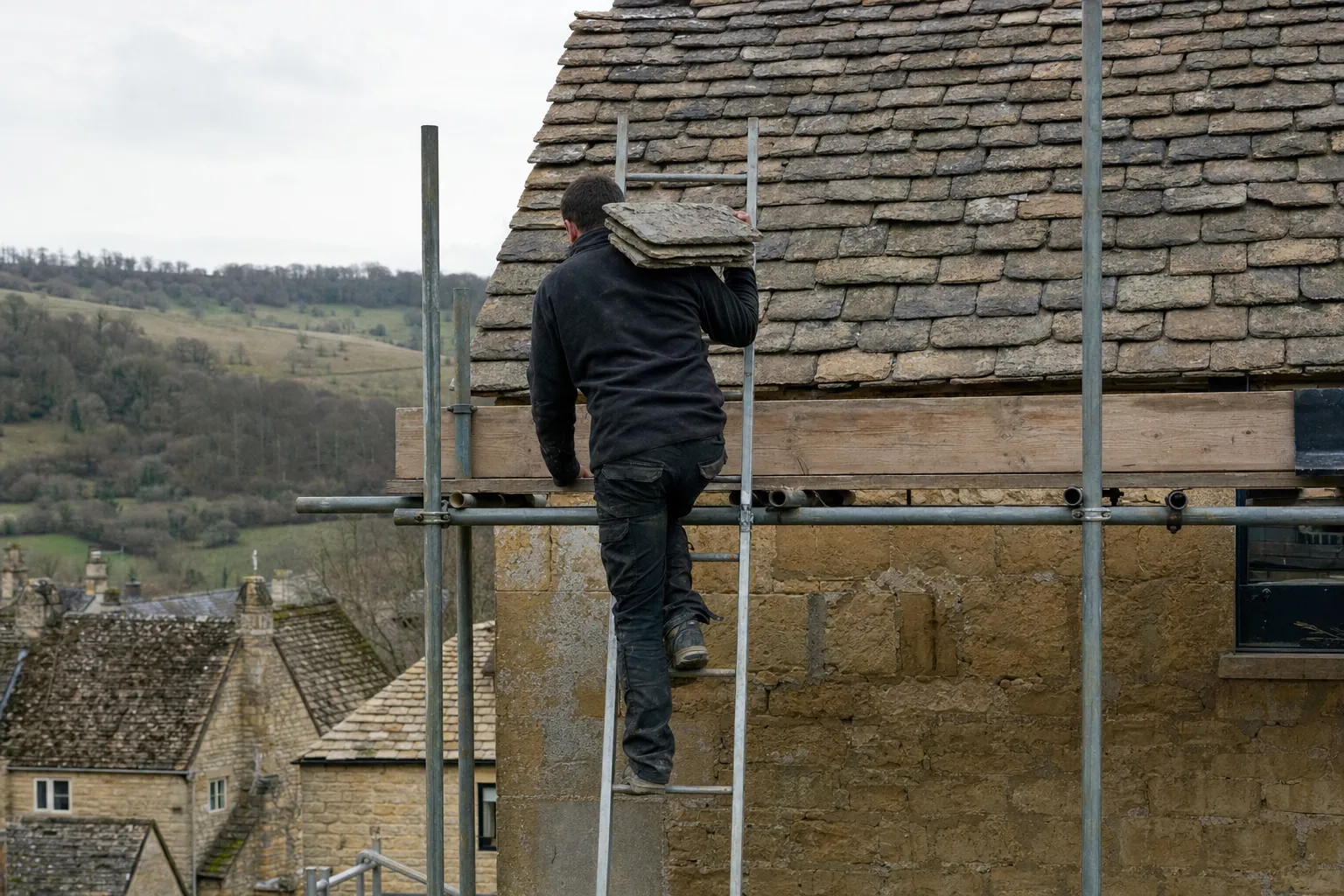
Stand near St Mary's and the village shows its years. The church dates from the twelfth century, the farmhouse at Bradfield Manor holds a fifteenth-century hall, and the cottages between them were built, extended and re-roofed across many generations. A roof here is rarely one clean piece of work. It is usually a patchwork of repairs, each made by someone with different materials and different habits.
Q1.1What do earlier repairs tell us?
Before we write a quote, we study how the roof has been mended. Mixed slate sizes in a single slope, cement fillets where lead should be, ridge tiles pointed with hard modern mortar, and nail holes that no longer line up with the batten spacing all tell a story. They also reveal the route the rain has taken and why an earlier repair let go. A quote that ignores that history tends to repeat the same fault within a few winters.
Q1.2Does a listed farmhouse need consent?
Both the church and Bradfield Manor Farmhouse carry Grade I listing, and a number of ordinary-looking houses nearby may be listed at lower grades. Work that would affect a listed building's character, including a change of roofing material, needs listed building consent. The parish church, being in Church of England use, falls under the ecclesiastical exemption, so its own roof work follows the faculty route. For your own house, a short call to Wiltshire Council's planning team settles the question before work begins. Matching repairs seldom call for consent, but the council decides what counts as matching.
Q1.3Can most of the old roof be kept?
On an older roof we favour the narrowest fix that stops the leak: refixing slipped slates, renewing a failed valley, re-bedding a verge. That preserves timber and covering that would be hard to replace like for like. Our roof repairs page describes how we approach that kind of job, and when a repair stops being the right answer.