
Every chimney stack ends in a pot, and every pot ends in an open mouth. What happens to that mouth is one of the least costly decisions you can make about a house, and one of the most overlooked. Left bare, it lets in rain, leaves, birds and sometimes a whole nest. Covered badly, it can choke the flue, let damp build up inside, or make a fire smoke back into the room.
A cowl is the general word for any cover fitted over the pot. Some are plain rain caps, some are mesh guards, and some are shaped to deal with wind. This guide sets out the main types, which one suits an open fire, a stove or a flue nobody uses, what fitting involves and what to ask the council first for a protected building. For the leaks that follow when a flue is left open, see why chimneys leak.
Pots and cowls: what each part does
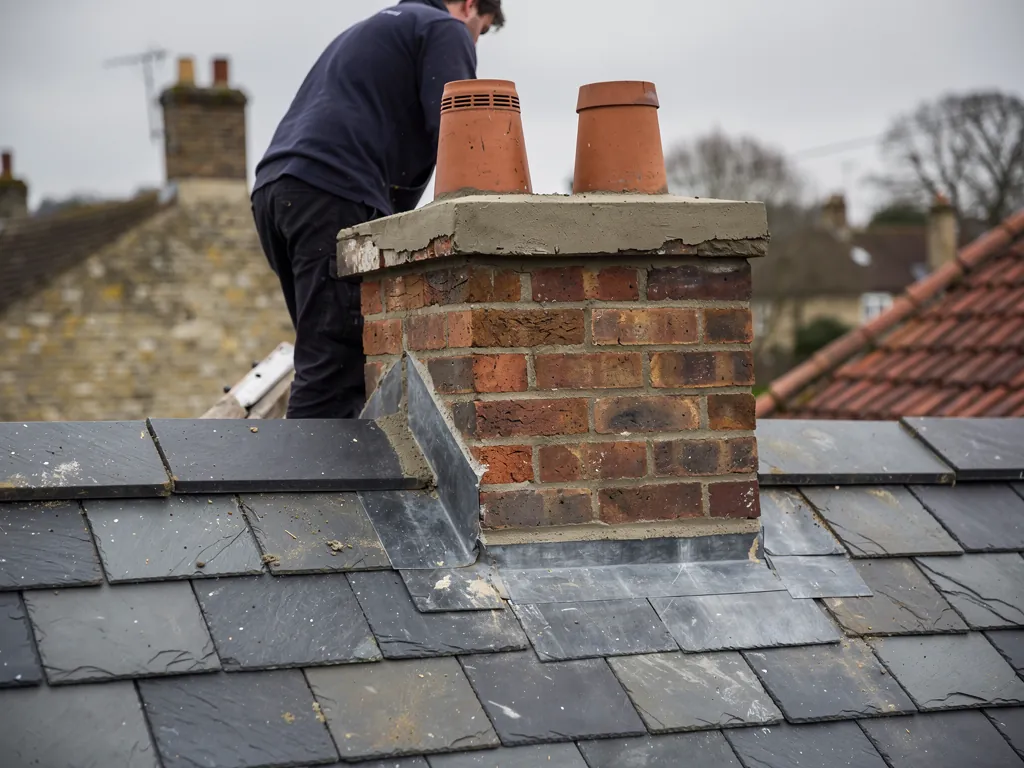
The pot is the clay or concrete tube bedded in mortar at the top of the stack. Its job is to carry flue gases clear of the brickwork and to give the flue a finished top. Pots come in many shapes, from plain round cans and tall decorative designs to squat conical tops, and on older terraces the pots are often part of the street's look.
A cowl sits over or in the top of the pot. The word covers several different products:
- A rain cap, usually a metal or ceramic hood held above the pot on short legs. It keeps rain from dropping straight down the flue but leaves a gap round the edge for air and gases.
- A bird guard, a wire or mesh dome or cage that stops birds entering. It does not shield the flue from rain.
- A ventilated cap for a disused flue, which combines a hood with a vent so the flue stays dry and air can circulate.
- An anti-downdraught cowl, shaped to stop wind blowing down the flue and into the room. Some rotate with the wind.
The pot and the cowl are separate decisions. A good pot with no cowl lets rain in. A cowl fitted to a cracked pot on failing flaunching does little good, because water gets in underneath. So the survey covers the whole top of the stack before any cover is recommended. Our guide to chimney flaunching covers the mortar that holds the pots.
Open flues, working fires and why they need different caps
A flue in use has to do something a disused one does not: it must let gases escape freely. Any cover on an active flue has to leave enough open area for that, and it has to stay clear of soot, tar and creosote, which collect on fine mesh and narrow openings.
For an open fire, the choice is usually a rain cap or a cowl with generous gaps and, if needed, a coarse bird guard. Fine mesh is a mistake on a flue that burns solid fuel, because soot clogs it, and a clogged guard can block the flue without anyone noticing until smoke fills the room. A guard with wide openings and a regular sweep keeps it clear.
Does a stove need a different cowl?
It often does. Stoves burn hotter and cleaner than open fires when run properly, but they depend on a steady draught and a clean flue. A cap that restricts the outlet will cause problems. Check the stove manufacturer's instructions, or ask the installer, before choosing a cowl. A flue liner fitted for a stove usually ends in its own terminal at the top of the pot, and the cowl must suit that.
What about gas fires and boilers on an old chimney?
Any cover on a flue serving a gas appliance is a safety matter, because blocked or restricted gases can be dangerous. Speak to a Gas Safe registered engineer before fitting a cowl to a flue that carries gas fumes. We fit the cowl, but the engineer decides whether the flue is suitable and which terminal is allowed.
Wind exposure matters too. A stack on an open ridge, or one that rises above a taller neighbour's roofline, is more prone to downdraught, which is where an anti-downdraught cowl earns its place.
Disused flues: capped, but never sealed
A flue that no longer serves a fire is still part of the building, and what you do at the top determines whether the breast stays dry. Leave the pot open and rain runs down the inside of the flue, soaking the brickwork from the inside and appearing as damp patches in the room. Seal the pot completely and you trap stale air, which condenses against cold brick and produces a different kind of damp, often with a musty smell.
The answer is a ventilated cap: a hood or lid over the pot that stops rain and leaves air moving through. Rain stays out, the flue dries slowly after wet weather and the chimney breast inside the house stays on the right side of damp. A vent at the base of the flue, in the fireplace opening or a sealed-up grate with an air brick, completes the circuit by letting air in at the bottom as well as the top.
Should I block the fireplace at the bottom as well?
If you do, put a vent in the blocking. A plate or board that seals the opening without a vent stops air moving through the flue and encourages condensation. The vent can be a small grille in the infill or the plate. It is a small detail that makes a big difference in an old house.
Our guide to capping a chimney covers the situation where the pot is removed and the stack is closed off with a flat cap. For a flue you intend to keep, a ventilated cowl is the better choice, because it leaves the option of using the fireplace again.
Do not push a plastic bag, a plank or a stuffed bag of rubble into a flue as a cheaper fix. It collects water, rots and can fall onto the fireplace below.
Choosing a material and fitting it
Cowls come in clay, terracotta, galvanised steel, stainless steel, aluminium and copper. For most homes, the practical choice is between a clay cap that matches the pot, and a metal one that is lighter and cheaper to fit. Stainless steel resists corrosion best. Galvanised steel is cheaper but rusts over time, especially where flue gases are acidic. Copper weathers to a green patina and suits period properties where the finish matters.
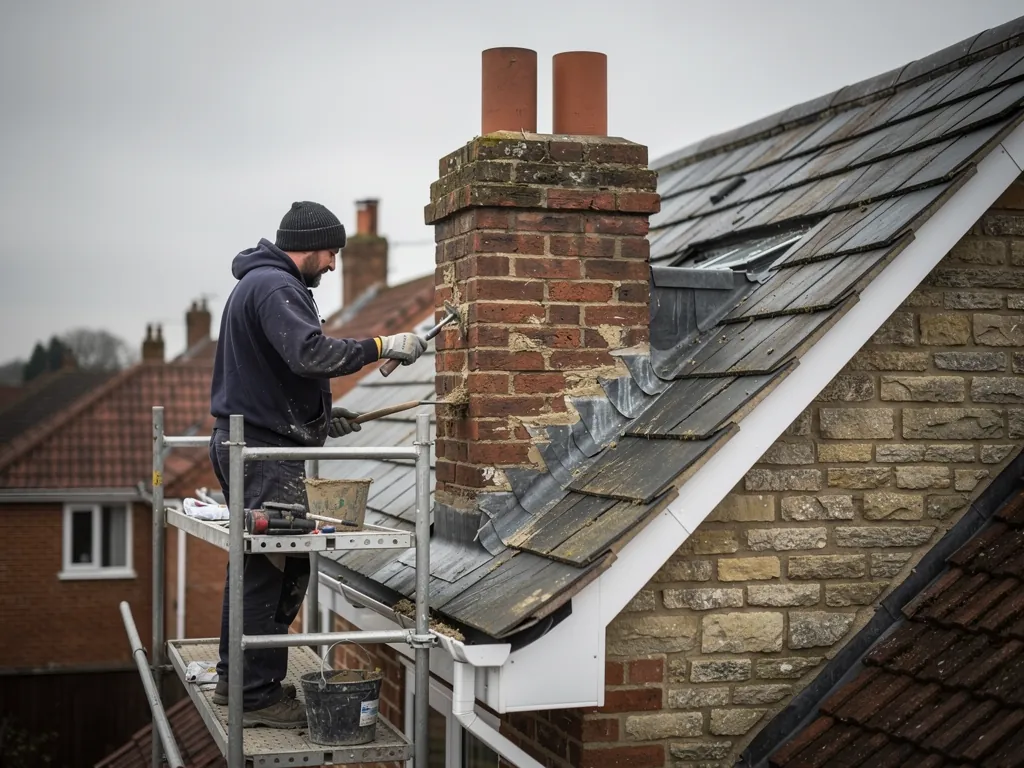
Fitting takes one of three forms. A clip or strap cowl fastens round the pot with a stainless band and needs no mortar. A cowl that sits in the pot mouth is held by friction or a bracket. A capped pot has a flat cover bedded in mortar, which is a permanent job. Which one suits depends on the size and shape of the pot, whether it is round, square or tapered, and whether the pot is sound enough to carry the weight.
Can I fit a cowl myself?
Not safely from the ground, and never from a ladder leaning on a chimney. Stacks are fragile and tall, and a pot knocked loose can drop through the covering below. We fit cowls during a chimney visit with proper access, and the work is short once that is in place.
Check the pot first. If it is cracked, leaning or sitting in tired mortar, the cowl should go on after the pot has been re-bedded or replaced. A new cover on a failing base is a false saving. If the pot is the problem, our guide to chimney pot replacement explains the steps.
The survey photographs the pot and stack top, and the written quote follows. Our workmanship guarantee runs for 10 years and comes in writing; afterwards the site is tidied and the waste goes with us.
Listed buildings, conservation areas and the look of the stack
Pots and cowls are small, but on a street of period homes they shape how the roofline looks. In Swindon's Railway Village the council's appraisal calls the roofs generally slate and says dishes and aerials on chimneys will be resisted. A metal cap is not a dish, but the council clearly cares how that roofline looks.
If your home is listed, work that changes its character requires listed building consent, and changing pots or adding a cowl on a visible stack may count. Doing work without consent is an offence, so ask Swindon Borough Council's conservation team, or the council for your town, before changing anything on top of a listed stack. Our guide to listed chimney repairs describes the checks we make before anything else.
In a conservation area that is not listed, planning permission is not usually required for like-for-like stack repairs, though an Article 4 direction can add controls. Ask before altering anything that changes how the stack looks from the street.
What suits an old stack that needs a matching pot?
Where a pot is missing or broken, a matching clay replacement is the usual answer, with a cowl in a similar tone. A bright aluminium cowl on a Victorian stack stands out, while clay or a dark finish blends in.
Older stacks suit lime mortar, and the flaunching should match the brickwork. Our page on lime mortar chimneys explains why.
Birds, nests and winter wear
An uncovered pot invites jackdaws, pigeons and starlings. A nest in a flue blocks it, which is a fire hazard and a carbon monoxide risk when an appliance is connected, and the damp material rots. Wild birds and their active nests are protected, so ask advice before disturbing one. Fit the guard when the flue is clear.
The mesh must survive weather and have gaps wide enough not to clog. Thin cheap wire rusts within a couple of winters and sheds fragments into the flue. Stainless steel outlasts galvanised, and a clip-on guard comes off for sweeping more easily than one set in mortar.
What does frost do to the top of a stack?
Frost works on pots, cowls and the mortar that holds them. Water gets into a hairline gap, freezes, expands and lifts a cap or splits a pot. The wettest, coldest weeks are when loose cowls blow off. Our guide to chimney winter damage explains the pattern, and why a check in early autumn is more useful than a repair in January.
If you have a working fire or stove, the person who sweeps the chimney often spots a missing cap, a damaged guard or a pot that has shifted. Our page on sweep or roofer explains how the two trades divide the work, and when each one should be called.
Send a picture of the stack from the garden, say whether the flue is used, and we will advise on a cowl or cap to suit. Call 01793 626096 or use WhatsApp or the enquiry form. More stack work is listed on our chimney repairs page.